Employers Want AI-Native Talent, but the Workforce Isn’t There Yet. Here’s How to Close the Gap

A new class of talent has emerged in the workforce, and, unlike the Gen Zers and millennials before them, its identity isn’t characterized by age. Say hello to the AI native, defined as someone who “fundamentally defaults to AI to design, execute and scale their workflows.”
An already healthy demand for AI-native talent is only expected to grow. According to Indeed’s latest research in partnership with YouGov1:
- 59% of employers consider hiring AI natives in the next 12 months essential or important
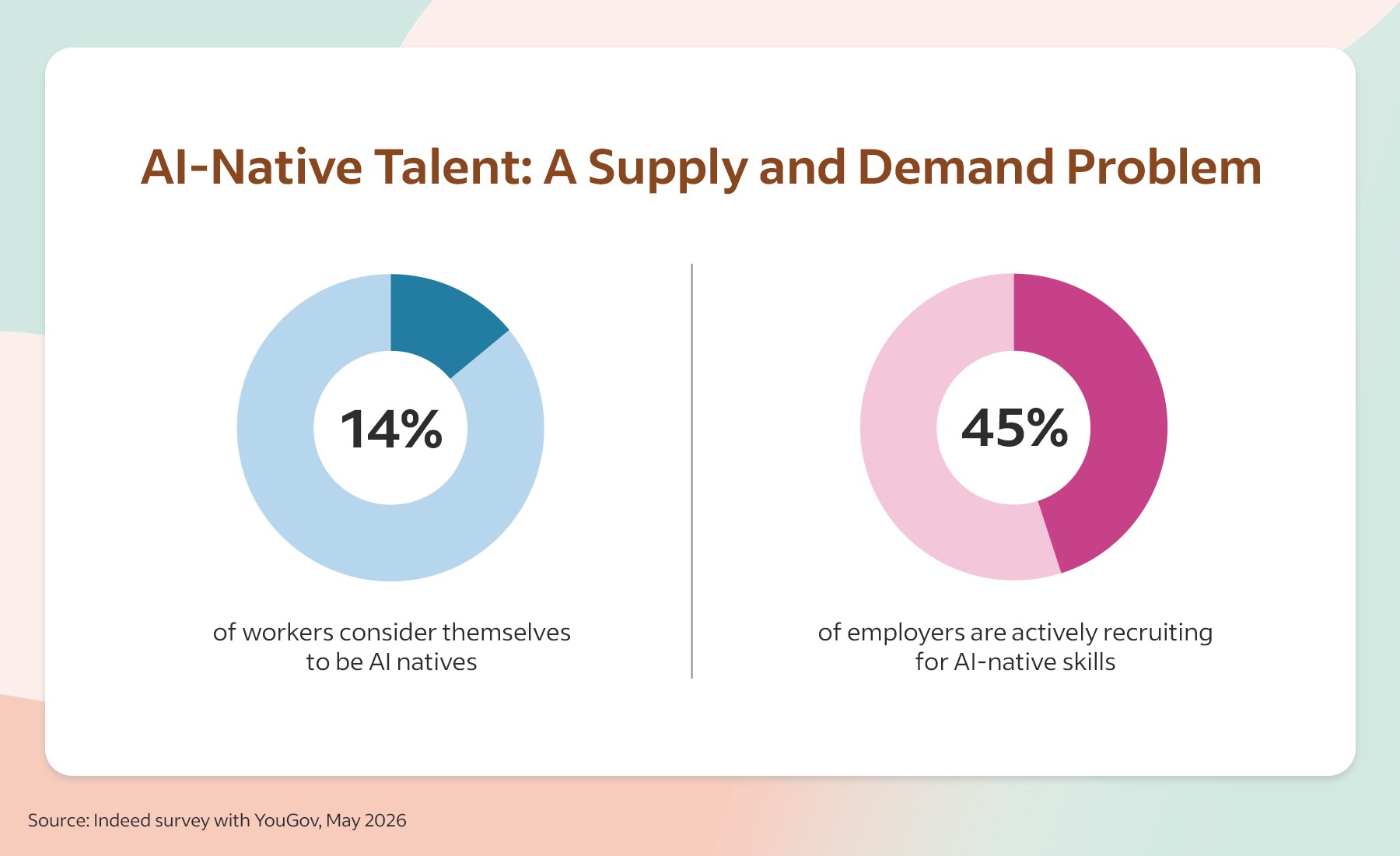
- 45% of employers are actively recruiting for AI-native skills
- 31% of employers expect AI fluency will be required for most or nearly all roles within two years
But there’s tension where three critical components of the hiring equation — employer demand, worker capabilities and management readiness — are moving at different speeds. Below are four key takeaways from the survey results, paired with opportunities for employers to close the gaps around hiring, developing and managing AI-native talent in the workforce.
This article was developed using the following working definitions, based on our proprietary data and findings at the time of publication:
- AI native refers to individuals who are highly skilled and comfortable with AI technologies and who fundamentally default to AI to design, execute and scale their workflows end to end.
- AI fluent refers to individuals who show mastery using AI technologies across various dimensions of their workflows but who don't always default to implementing AI over established legacy processes.
Get the latest insights on the workplace and hiring, straight to your inbox
Sign Up Now4 key takeaways on AI-native talent and manager readiness
1. Employer demand outpaces what the workforce says it can do
Mismatch #1: A supply vs. demand problem. Employers looking to hire AI-native talent may have a hard time finding them in a market where less than 1 in 6 workers considers themselves an AI native.
Mismatch #2: The expectation vs. reality gap. How employers expect their workforce to use AI doesn’t align with how comfortable workers are using it. Employer expectations even run two to three times ahead of worker comfort levels for more advanced tasks.
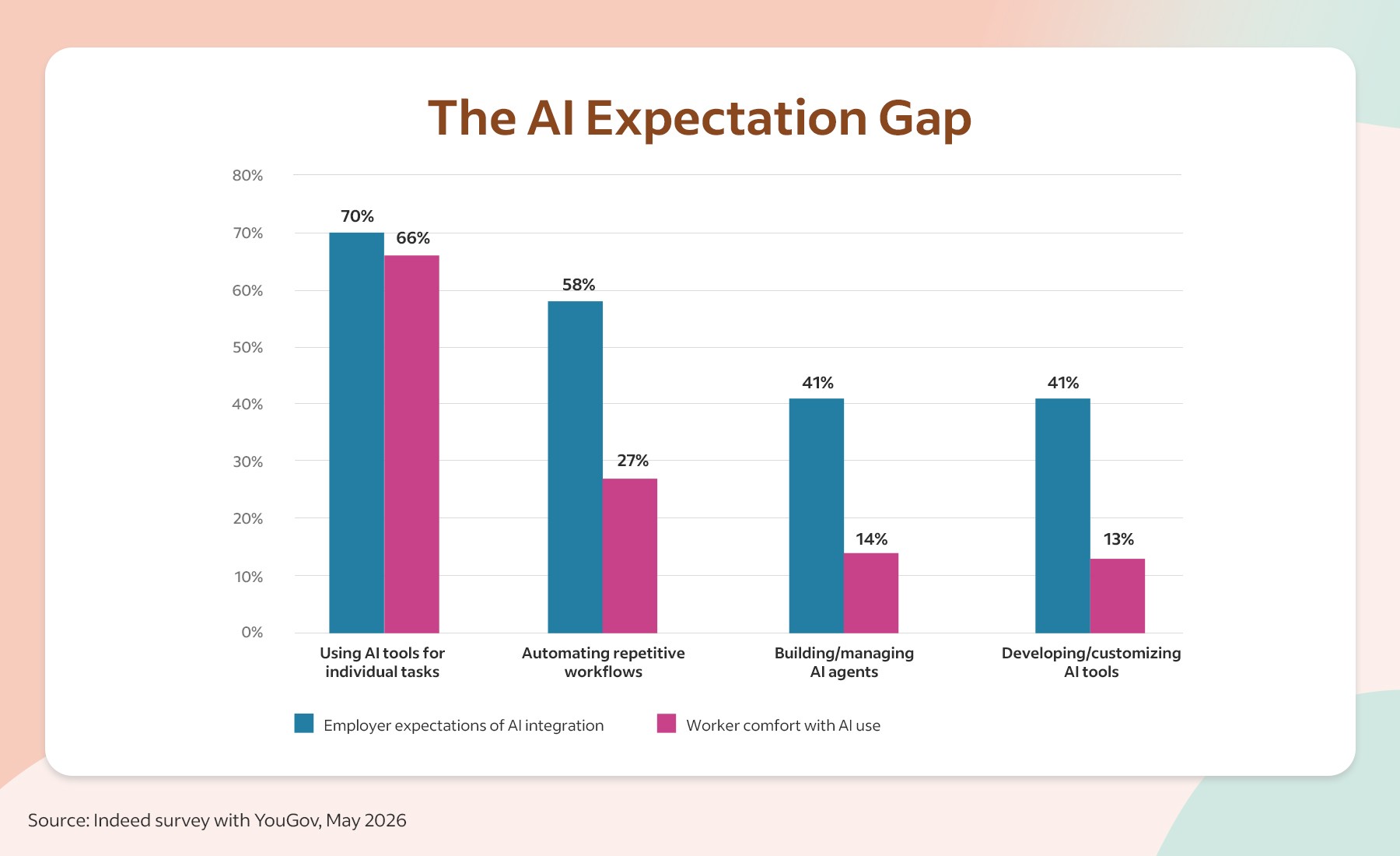
What these mismatches mean for employers: The perception gap, along with the supply and demand issue, highlights a need to shift how we write role requirements.
The sourcing opportunity: Design roles for realistic skills.
As a real-life example, research shows that a growing number of job postings are leaning toward more senior, AI-fluent roles. Indeed Hiring Lab Economist Guillermo Gallacher says the shift happened with the rise of "vibecoding" (a term that describes a working dynamic where humans direct the vision for a product while AI handles the coding and technical execution).
Instead of searching for rare AI natives who have mastered specific tools, try rewriting job descriptions to focus on core vibecoding capabilities such as adaptability or comfort with ambiguity to widen the talent pool.
2. Workers want more AI training than employers are offering
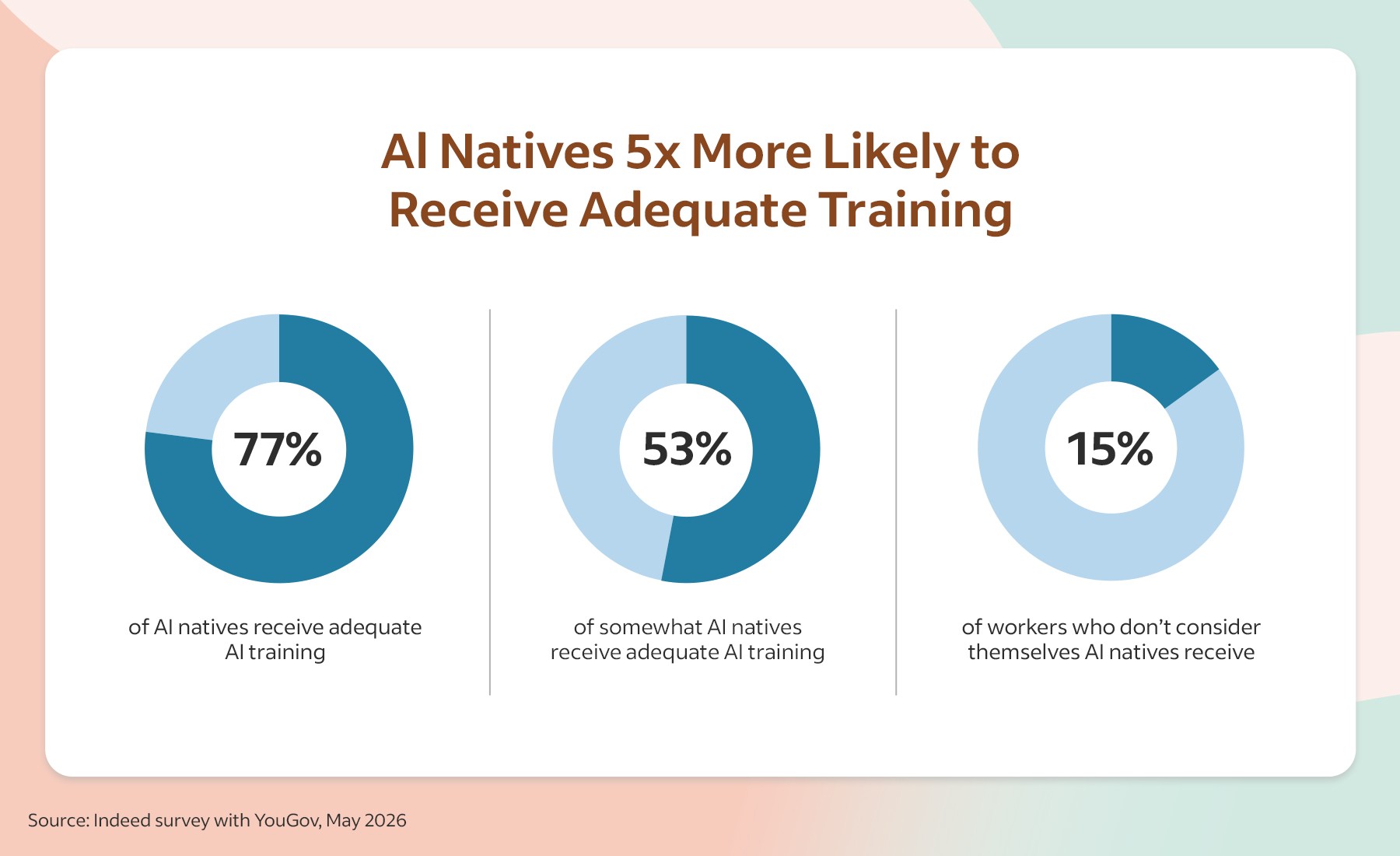
In looking across all workers surveyed, more than half (52%) of workers say they aren’t getting the AI training they need. But who you ask makes a difference: Workers who consider themselves to be AI natives are far more likely to report adequate employer training (77%) than their counterparts.
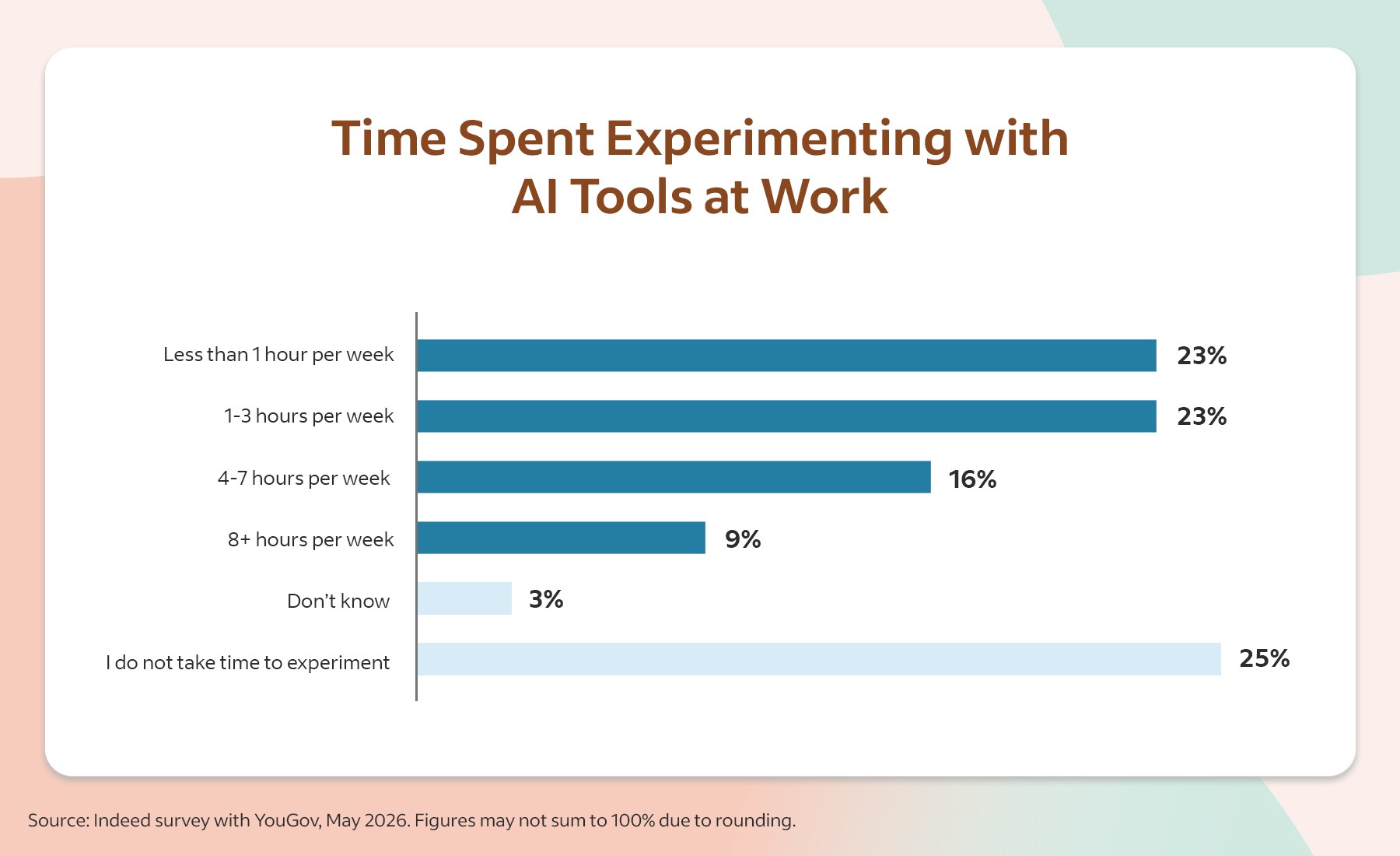
⏱️ Time check! How much are workers actually using AI at work? Most (71%) say they experiment with AI at work, but the length of their experimentation varies. Nearly a quarter (23%) say less than an hour per week, with another 23% estimating 1-3 hours weekly.
The upskilling opportunity: Move toward equitable, formalized training programs.
Hannah Calhoon, VP of AI at Indeed, emphasizes that the most successful enterprise training programs are role-specific rather than generic. “Instead of throwing AI at everything, there are two specific questions you need to ask: What is the specific business problem we’re trying to solve? Then, is AI actually a good fit for this?” says Calhoon.
In addition to broad horizontal tools, she recommends a function-specific approach. “We equip different teams with specialized tools — from software engineers, marketers and legal teams — because they do really different tasks. Customized AI helps them get the biggest bang for their buck."
3. Managers are divided on their ability to effectively lead AI natives
A new class of worker also requires a new class of management. But managers are split, nearly evenly, on whether or not they feel ready to lead them. The survey data shows 45% of managers feel equipped, while 43% do not.
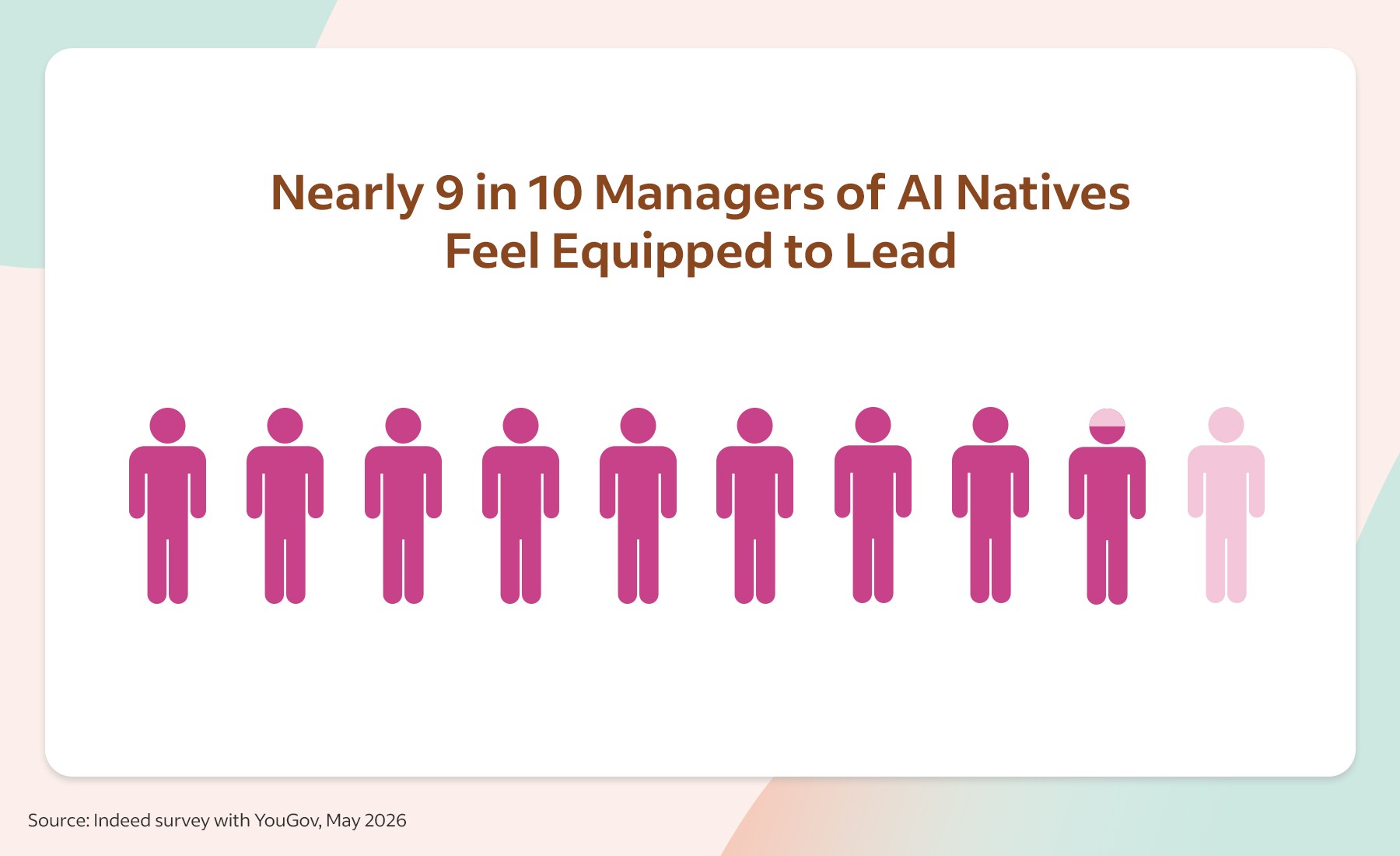
But exposure builds judgment: Among managers who already lead AI-native talent, nearly 9 out of 10 say they feel equipped to manage this class of talent. Additionally, 88% of employers already recruiting for AI natives provide manager training — compared to only 8% of employers who are not.
The leadership opportunity: Identify gaps and provide customized manager support.
Managers don’t need to be tech experts to lead in the AI era, but they do need to be great coaches. Maggie Hulce, chief revenue officer at Indeed, references a massive shift as the majority of jobs will transform so that “AI assists with tasks, but humans still lead the work.” “AI-powered tools and insights can help managers provide more personalized and effective coaching, allowing their teams to adapt more quickly,” she says.
Rather than trying to train managers to out-prompt their direct reports, try providing support to sharpen their uniquely human skills. A focus on strategic orchestration, psychological safety and creative judgment can help managers more confidently lead their teams, regardless of their technical fluency.
4. Workers are still skeptical of AI
While many workers are experimenting with AI, barriers to going deeper remain. A quarter (25%) name concerns over AI accuracy, ethics or data privacy as the biggest barrier preventing them from upskilling in AI.
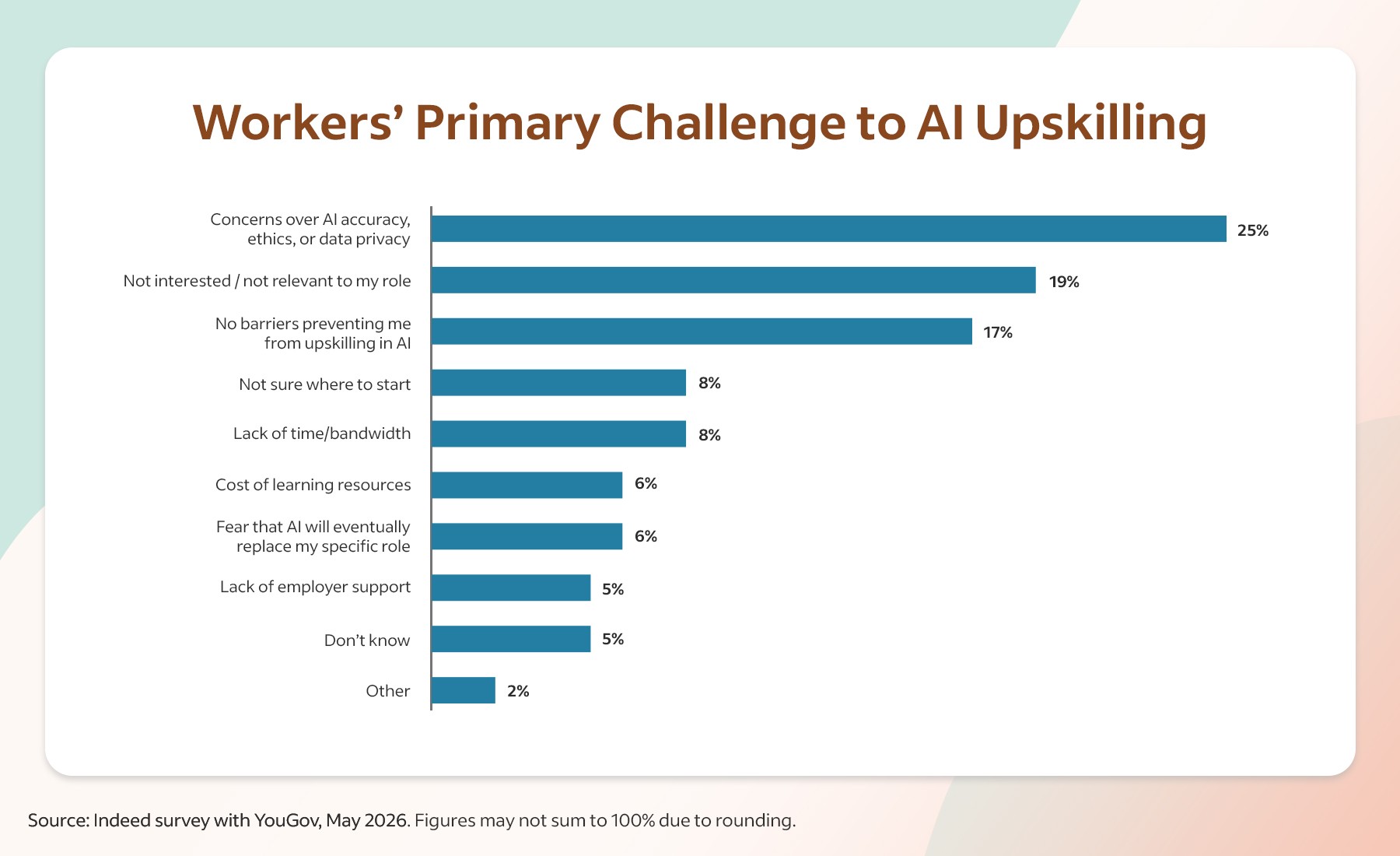
As for employers’ primary motivation for hiring AI natives, efficiency and productivity lead the pack. Only 4% of employers cite headcount reduction; this calm is mirrored in the worker sentiment above, in which only 6% of workers fear that AI will eventually replace their roles.
The culture opportunity: Build trust with transparency.
Workers aren’t afraid of AI — they’re afraid of what you’re not telling them. Addressing these anxieties often starts with open dialogue. Emphasizing how AI can augment daily workflows, rather than replace roles, can go a long way in fostering psychological safety among your workforce.
To address workforce barriers to upskilling, organizations can focus on becoming "architects of trust,” advises Kyle M.K., Indeed senior talent strategy advisor. Rather than rolling out tools in silos, this involves bringing HR, IT and legal teams together with employees to co-create clear AI policies and visible governance around the accuracy, ethics and safety of AI use at work.
What the AI-native talent gap means for employers now
The research highlights some gaps in perspective around employers’ preparedness for AI natives in the workforce. But it also reveals some natural opportunities for employers to explore while the talent supply trails demand.
Rather than searching only for existing AI native talent, consider an investment in more formalized AI training to move toward developing AI fluency and skills within your existing workforce. Even small organizational changes can buoy AI adoption and workforce confidence and provide better support for AI natives in the long-term.
1Indeed survey with YouGov, U.S., N=1,301, May 2026 (1,001 job seekers; 300 hiring decision-makers at 500+ employee organizations), fielded May 22–June 2, 2026.
_____
Related links:
How to Evaluate AI Fluency In Your Team and New Hires
From Hidden to Human: The Case for Radical Transparency Around AI in Hiring
How HR Leaders Can Become Architects of Trust in AI Hiring
Surprise! The Skills That Matter Most in an AI Economy Aren't in Tech
Get the latest insights on the workplace and hiring, straight to your inbox
Sign Up Now
Discover Work Wellbeing
Get insights and inspiration for the modern world of work
We’ll be in touch soon with the insights and inspiration you need to lead a thriving workforce. In the meantime, check out the recommended articles below.


