Matthew Jensen, Head of Global Government Relations & Public Policy

Bridging the Public Sector Talent Gap: Key Takeaways from Indeed’s Inaugural Workforce Summit
Public sector hiring connects people with work that keeps communities running. But attracting those people and helping them move from interest to employment takes more than an open role and a strong mission.
That challenge brought government leaders, workforce experts, policymakers, and industry partners together at Indeed’s inaugural Public Sector Workforce Summit in Washington, D.C.
Featuring leaders from state governments, the U.S. Coast Guard, the United States Capitol Police, and industry experts, the conversation centered on how government employers can adapt to changing workforce demands while making hiring more accessible, efficient, and transparent.
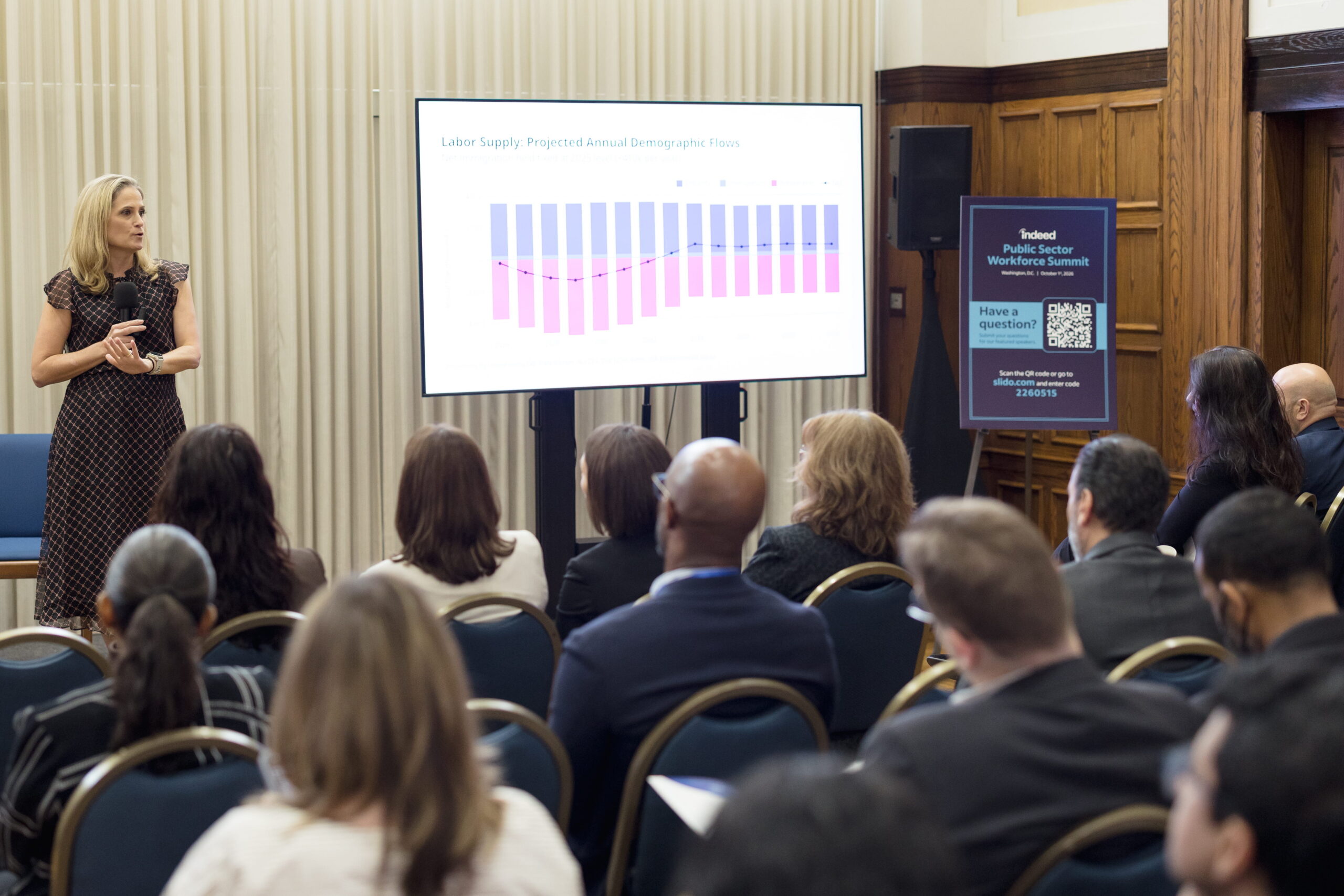
Indeed Hiring Lab Director of Research Laura Ullrich started the event by diving into the job market for public sector employers and workers today. Her analysis reveals an expected 3.7% retirement rate across government workers by 2029 without a strong pipeline of younger workers to step in. As outlined in Indeed’s U.S. State and Federal Public Sector Workforce Reports, open roles and qualified candidates exist but what’s needed is a bridge to connect top talent with these government roles.
What We Learned: Key Strategies to Bridge the Public Sector Talent Gap
Expanding the Talent Pipeline: Shift to Skills-First Hiring
Traditional credential requirements often exclude qualified candidates. Transitioning to skills-first hiring widens access to public service careers by helping applicants translate their past experience into government roles.
- Removing unnecessary degree requirements opens doors for non-traditional talent, early-career professionals, and veterans.
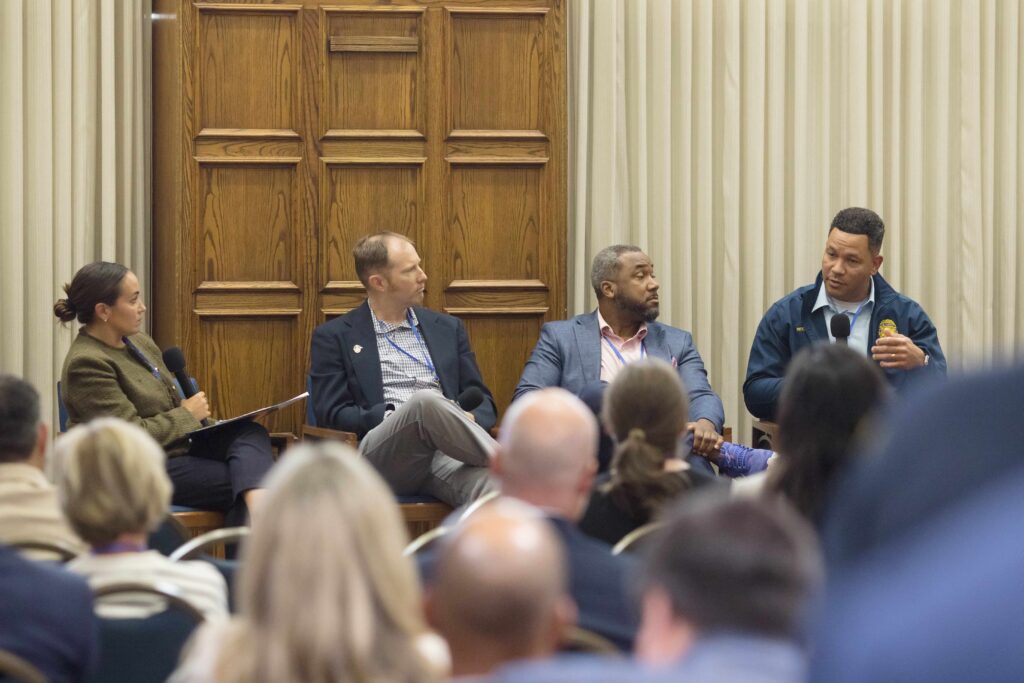
- Colin MacInnes, Chief Marketing Officer at the U.S. Coast Guard, highlighted military spouses as an exceptionally adaptable, resourceful, and underutilized talent pool.
Improving the Candidate Experience: Cut the Hiring Timeline
Historically, the time to hire for government roles is significantly longer than that of the private sector. On average, it takes the federal government 101 days to fill a role compared to 35 days for a U.S. business. These long timelines can put a burden on the candidate—and may mean they move onto an offer that comes faster and the government employer loses a talented applicant.
- Sergeant Dareick Barr, Recruitment Programs Coordinator for the United States Capitol Police, discussed how his team is modernizing their candidate experience by assigning a dedicated recruiting point-of-contact to guide candidates through what is traditionally a confusing application process.
Modernizing the Hiring Process: Smart AI Adoption & Partnerships
Speakers emphasized that adopting AI in government takes more than new software. It requires aligning procurement policies, partnerships, and day-to-day operations so new tools can work in practice. Public-private partnerships can help bridge those needs, supporting effective AI adoption in the hiring process.
What’s Next for Public Sector Hiring
Timely labor market insights become more useful when paired with practical improvements to hiring. Through our in-depth data and market intelligence, skills-based candidate matching, and simplified application tools, we help government employers connect with qualified candidates faster and reduce critical hiring delays.
By convening this conversation, Indeed brought its labor market research and experience across public and private sector hiring into an exchange grounded in the realities of public service. We will continue partnering with public sector leaders to provide the data, technology, and strategies needed to keep communities moving forward.