
Thousands of HR practitioners, recruiters, and executives gathered in Phoenix and tuned in virtually for Indeed FutureWorks 2026. Leaders from within Indeed and beyond shared their perspectives on the human advantage in this new era, and attendees took part in provocative discussions about how AI, demographic shifts, and trust are reframing the future of work.
Here’s what we learned:
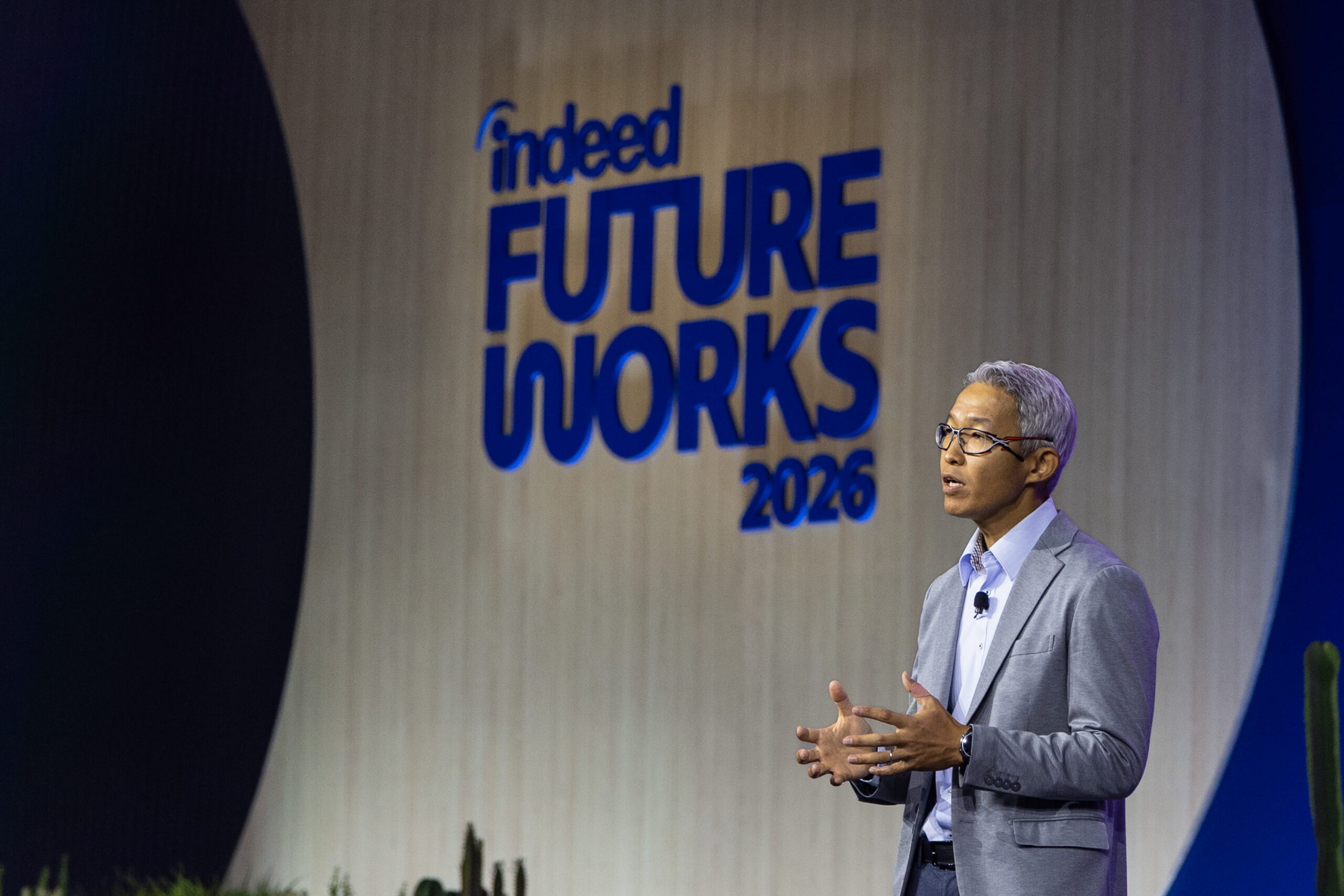
The Human Advantage in the AI Age: Better Intelligence, More Meaningful Connections
Day 1 opened with a simple idea from Indeed CEO Hisayuki “Deko” Idekoba: the work only people can do is often not the work that takes the most time. He shared how Indeed is using AI to remove that friction so hiring teams can spend more time where they add the most value, such as us building trust, guiding managers, and evaluating real potential. “Over the next three to five years, I hope recruiters no longer have to spend hours on manual tasks,” Deko said. “AI should take on more of that work so recruiters can get back to building connections with the right match. That is the future we are building toward.”
By 2032, Indeed Chief Economist Dr. Svenja Gudell noted during her talk, there will be roughly six million fewer workers than today, with an aging workforce, shifting immigration patterns, and a widening skills mismatch compounding the shortfall. Her message to employers was to look beyond resumes and focus more on transferable skills, while using AI as a tool to help navigate a labor shortage that is coming regardless. As Svenja put it, the work will still be there, but the challenge is making the right matches between people and opportunity.
Indeed’s Connected Platform Built for Speed, Efficiency, and Quality
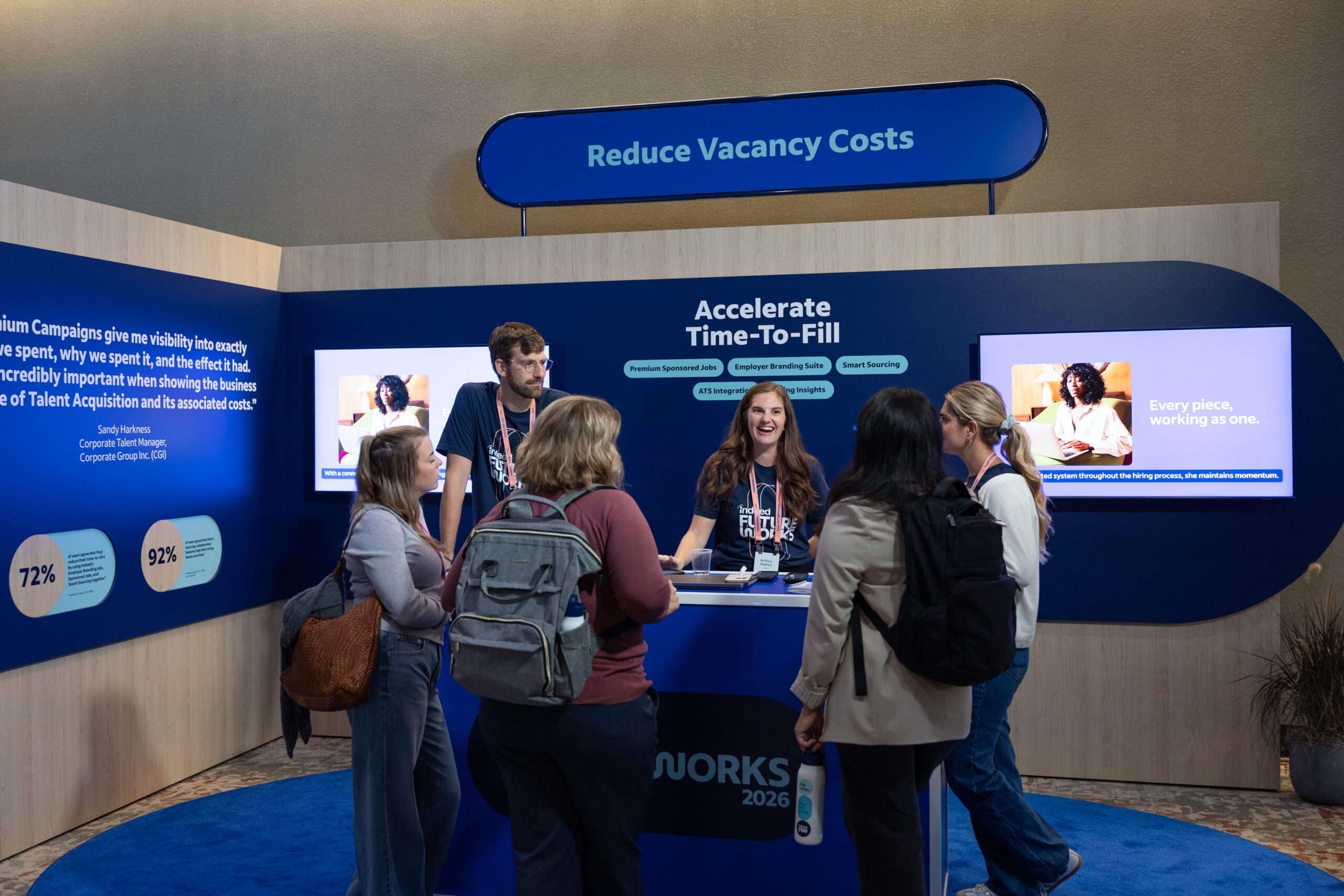
Indeed product leaders John Fox, Thomas Bergman, and Hannah Lindsley demonstrated how Indeed’s recent slate of products work together to help employers of all sizes and needs hire effectively, taking into account their own definition of quality.
- Premium Sponsored Jobs: Hiring isn’t a one-size-fits-all, which is why Premium Sponsored Jobs combines better targeting, stronger matching, and stronger visibility to help employers fill roles faster. In fact, data shows it delivers 50% faster time-to-hire than non-sponsored jobs posted directly on Indeed.Indeed data (US)
- Employer Branding Suite: 89% of job seekers research company reviews before applying to a job.Indeed + Qualtrics International Job Seeker Survey 2023 It’s why tools like the Employer Branding Suite and Brand Score help employers show up authentically and consistently.
- Smart Sourcing with Sourcing Assistant: By automating the heavy lifting of sourcing, Sourcing Assistant lets recruiters spend more time on human conversations. Employers using Sourcing Assistant save an estimated 11.5 hours per week on average.Indeed data (US). Based on the average time required to send a manual sourcing outreach.
- Smart Screening: As soon as applications come in, Smart Screening helps evaluate and identify relevant applications guided by employer’s specific criteria. Recruiters can make more informed decisions faster and focus on qualified talent and human connection. Smart Screening requires 26% fewer applications to find a hire, on average.Indeed data (US)
“The best technology handles what slows you down so you can focus on what is uniquely human. AI can search at scale, help match talent to opportunity, automate initial outreach, and surface relevant information. These are all tasks that take significant time and effort, but they don’t require human judgement at every step.” John explained. “What AI can’t do is understand motivation, recognize potential that doesn’t fit a template, advise business leaders, build a relationship, earn trust, or help a candidate make a decision that might change their life.”
Trust in the AI-powered tools hiring teams use is essential. Indeed CIO/CSO Anthony Moisant and VP of AI Hannah Calhoon shared how Indeed approaches AI thoughtfully from experimentation through to product. They noted organizations that benefit most from AI will not be the ones that automate the most. Instead, they will be the ones using AI to improve work, strengthen judgment, and build trust as they scale. Indeed’s approach is to go at a “safe speed,” creating clear pathways, redesigning workflows, and building in human accountability.
Creating More Time for What Humans Do Best
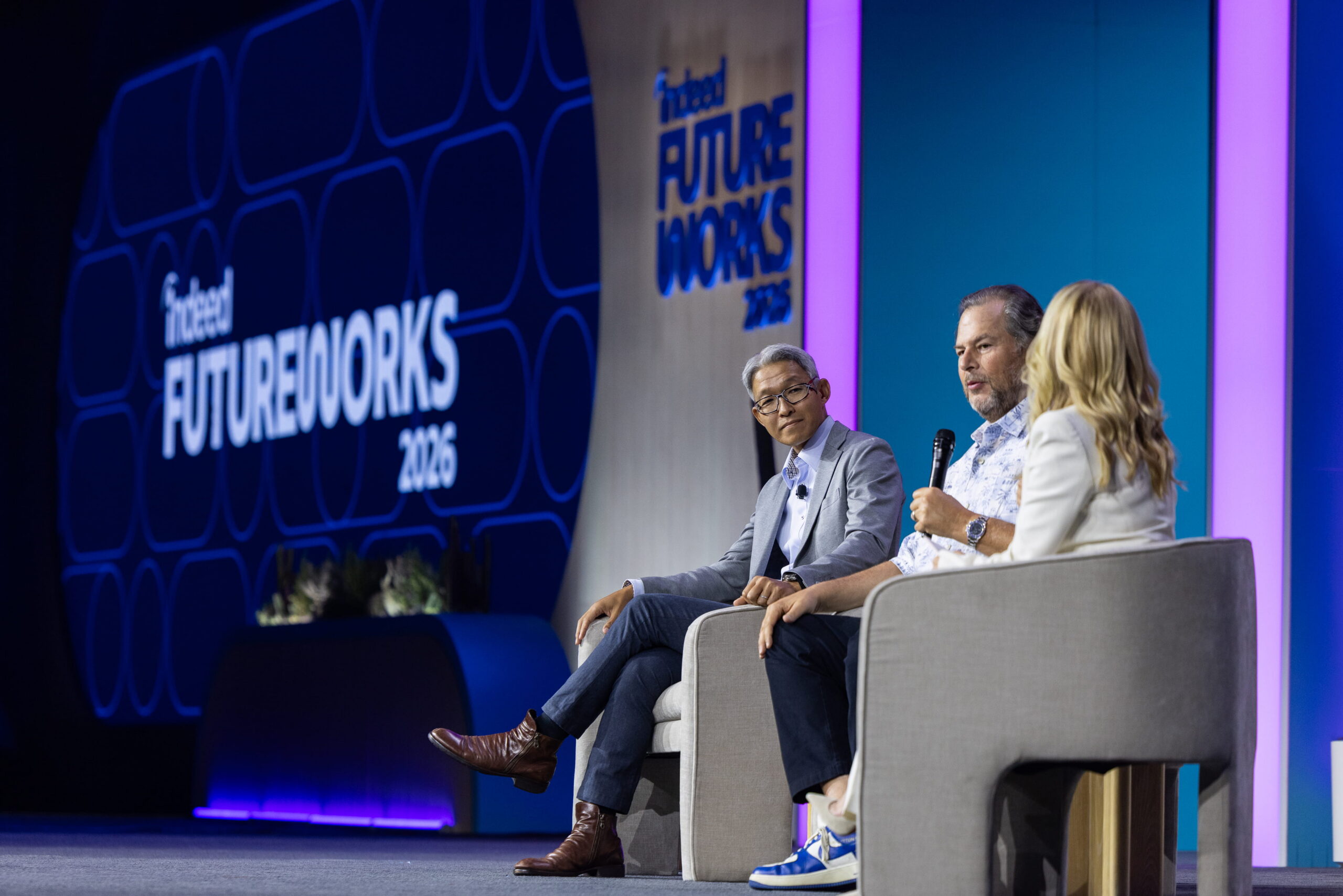
Marc Benioff, Chair, CEO and Co-Founder of Salesforce joined Deko to explore the future of work and how agentic technology is reshaping hiring, workforce structure, and company culture. The two discussed how AI can augment human potential to increase the scale of what’s achievable. “Engineering is humans and agents working together. Service is humans and agents working together. In our sales organization, it’s the same,” Marc noted. “These are all really good examples of humans and agents working together. I see this as a huge growth catalyst.”
Indeed Chief Marketing Officer James Whitemore illustrated why a better hiring experience means making the job seeker experience better, too. “Humanity is how we build greater affinity and trust with job seekers. And by working to increase humanity on both sides, employers become more able to find the right people for the right roles, while job seekers become more able to find roles that are truly right for them,” he said.
Industry Perspectives
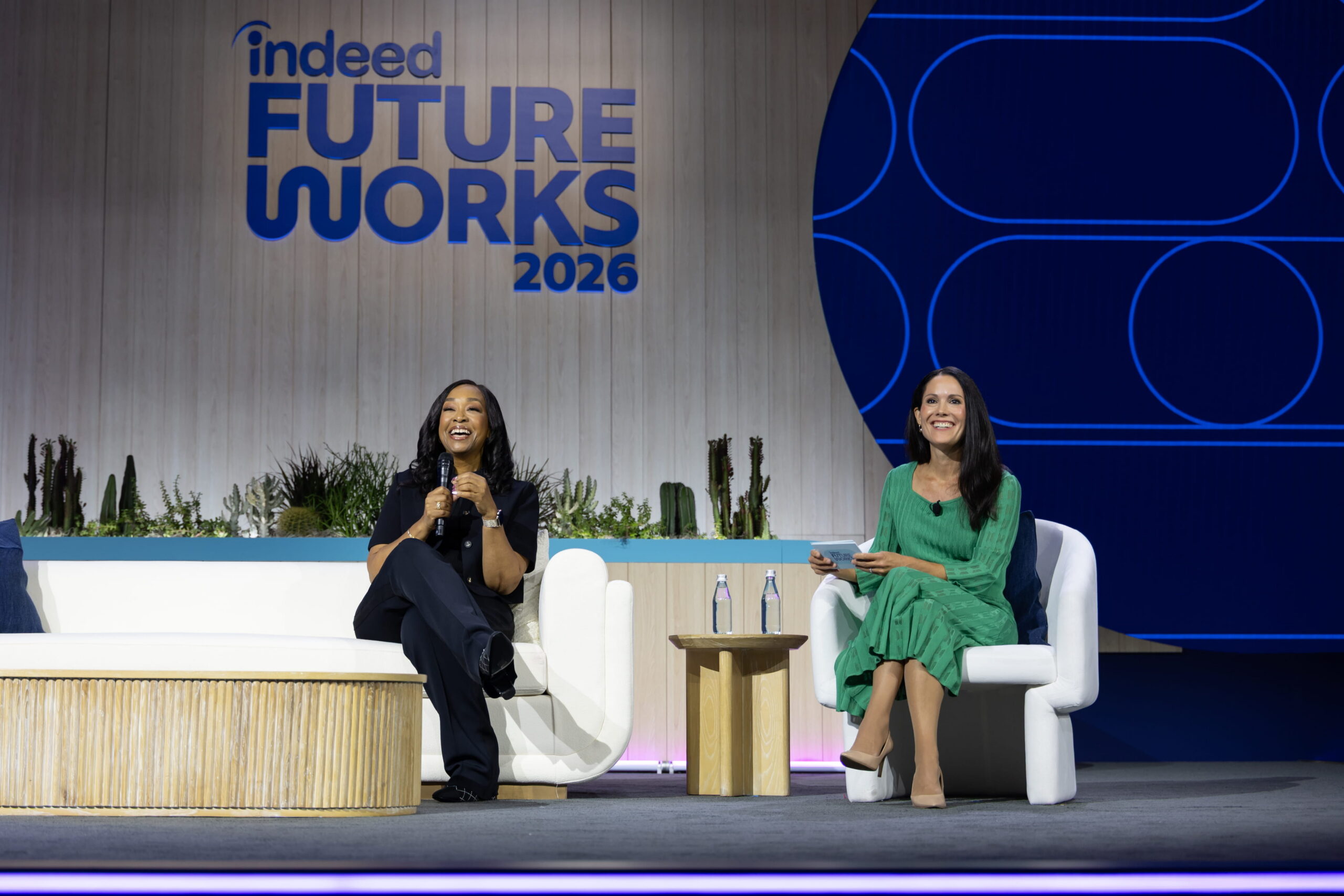
FutureWorks featured several thoughtful perspectives on work, AI, and leadership. Shonda Rhimes, award-winning writer, producer, and CEO of Shondaland, chatted with Indeed Chief Revenue Officer Maggie Hulce onstage about creative ambition and authentic leadership. When asked to share advice for the people leaders attending FutureWorks, Shonda shared, “It’s a little Olivia Pope, which is: Trust your gut. Your gut tells you everything you need to know. As opposed to leaping onto the next trend in what happens in hiring or the next trend in team building. It’s about doing the stuff that you know works. It’s about being smart enough to innovate when you know the stuff you’re doing isn’t working as well. And it’s about really appreciating the people you get to work with.”
Also featured: Red Lobster CEO Damola Adamolekun and Glassdoor President Owen Humphries explored the value of frontline workers in transforming Red Lobster; Wharton Professor Ethan Mollick on how to thoughtfully and consciously embrace AI to shape our future; author and trust expert Rachel Botsman on how to harness trust and innovation in this turbulent era; Harvard Business School Professor Joe Fuller on how AI is transforming entry-level talent strategy; and Poetechnologist and ex-Google AI strategist Lauren Ducrey on how to use AI a collaborative mirror that amplifies the human advantage.
Looking Ahead
There’s no singular playbook for navigating the future of work. But two days of conversation made one thing clear: the human advantage remains strong as long as we stay focused on what makes us human, use AI to expand what we’re capable of, and never lose sight of the job seeker at the core of what we do.
Want more? Head over to our FutureWorks library to catch up on key presentations from the conference.