Employers Don’t Have a Pipeline Problem. They Have a Trust Problem.

Key Takeaways:
- Indeed conducted a survey with YouGov of job seekers and employers to learn what they think about the current labor market.
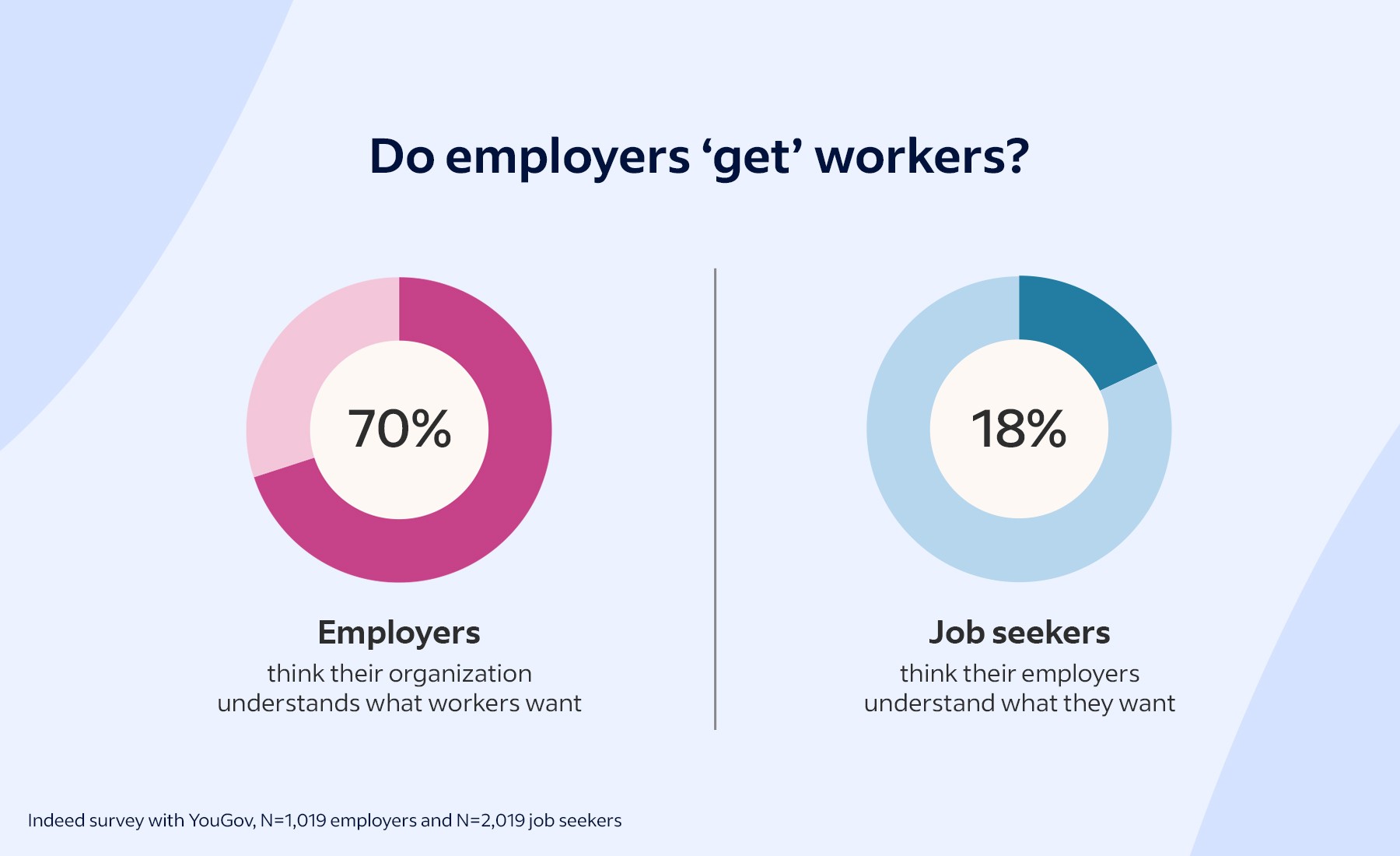
- One surprising finding: 70% of employers think they understand workers, but only 18% of job seekers agree — a widening trust gap that erodes retention.
- This article offers a four-step playbook for building trust with your workforce. Learn to create tighter feedback loops and bolster your brand through demonstrated change.
To analyze the uncertainty of the future of work, we’ve built a language to rationalize a trust problem. We call it “job hugging,” “gig stacking” and “quiet quitting.” These labels feel actionable — but they don’t address the real factors at play.
As Kyle M.K., Indeed Senior Talent Strategy Advisor, puts it, “These are nicknames for workers’ coping responses to structural issues — pay insecurity, burnout, low trust and a lack of visible action. We need to fix the causes, not rebrand the symptoms.”
Indeed’s 2026 U.S. Sentiment Survey with YouGov1 finds that 70% of employers believe they understand what workers want. However, just 18% of job seekers agree. We call this tension the “Stability Standoff”— both sides of the hiring funnel are seeking stability amid rising economic anxieties, but their respective paths often contradict, leading to misunderstandings and misgivings.
The main culprit, according to M.K., lies in internal sentiment strategies like pulse surveys. They often don’t ask the right questions, preventing leaders from taking the right action. Here’s how employers can better tap into employees’ needs and win back the trust of an increasingly disengaged workforce.
Get the latest insights on the workplace and hiring, straight to your inbox
Sign Up NowWorkers vs. Employers: A Bleak Market Outlook
In our survey, both job seekers2 and employers say they expect the following to increase in 2026:
- Job hugging: employees staying put rather than changing jobs
- Gig stacking: workers juggling multiple jobs
- Quiet quitting: employees doing just the job description — no extra effort
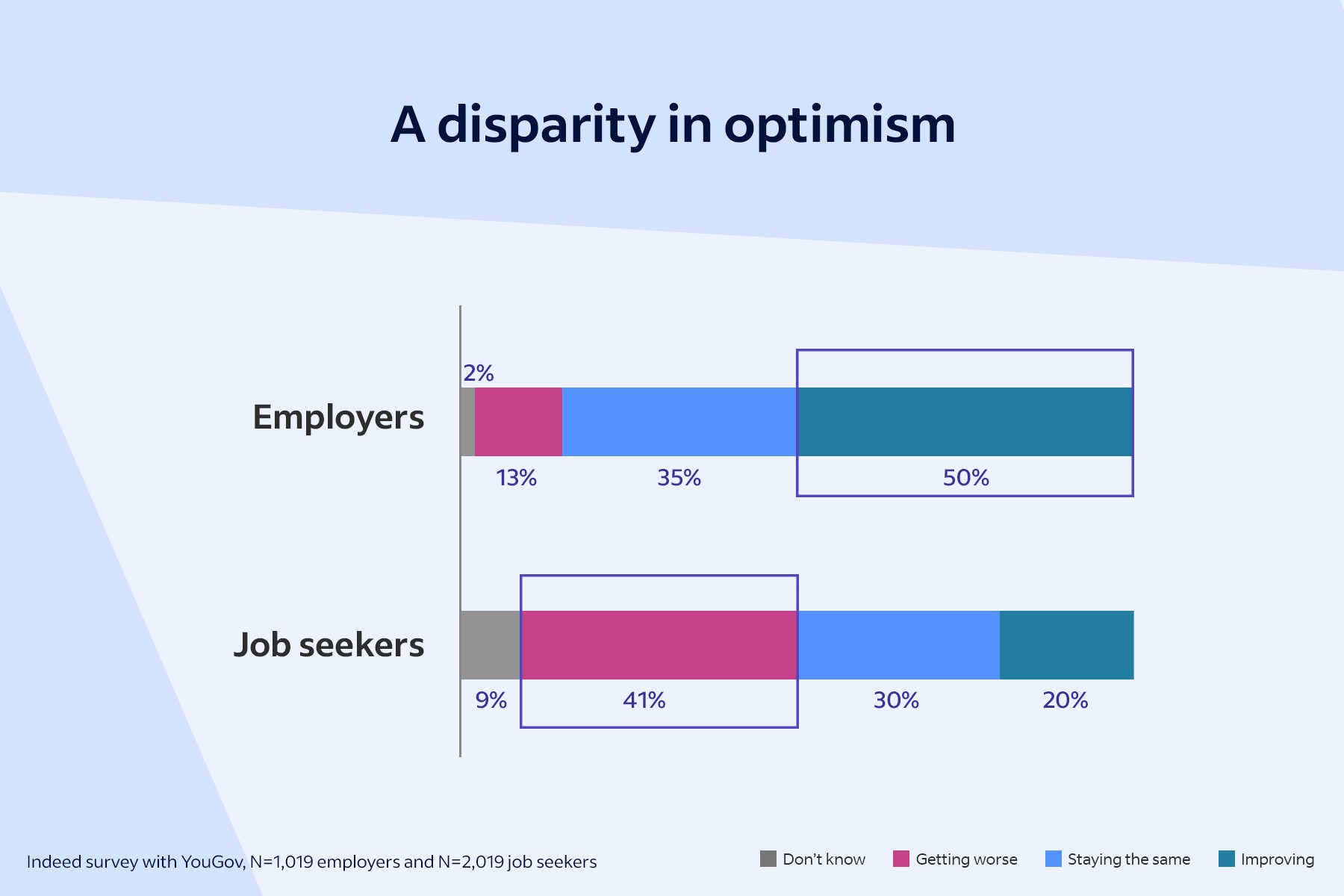
The expected growth of these trends speaks to an overall sense of dissatisfaction and stress pervading the workplace. Just one-fifth of job seekers say the overall job market is improving, compared to half of employers. In fact, 41% of job seekers actually think the market is getting worse. In short, their outlook is bleak, and they don’t see it getting better anytime soon.
We often give candidates tips on how to get past a cryptic ATS system or “show up better” at interviews. However, M.K. says, “It’s not their responsibility to ‘perform’ well at selling themselves, negotiating or copywriting a resume. Their job is to be a nurse, teacher, software engineer. It’s the employer’s responsibility to be attractive to good workers and give them the resources to succeed.”
💡Indeed User Tip: Use Talent Scout outreach with skills‑aligned messaging to meet strong candidates where they are, rather than expecting them to “perform” into your process. |
The path toward greater retention and workforce stability is not merely identifying the workplace behaviors — it’s reducing the structural friction that produces them.
How Trust Impacts Your Organization’s Bottom Line
A focus on trust isn’t just ethical — it can positively impact performance.
- Faster feedback loops can reduce attrition risk. When your people see visible changes within a month, it interrupts passive job searches or “rage applying” (employees impulsively mass-applying to new positions out of anger or dissatisfaction).
- Managers regain capacity. Fixing structural blockers (inflexible scheduling, unclear mobility) returns hours to managers who are otherwise stuck managing churn.
- EVP becomes credible. Your employer value proposition (EVP) is whatever happened the last time someone raised a problem. Close the loop to reflect well on your brand.
- AI readiness improves. The same transparency muscles you build for trust are the ones you need to implement responsible AI, like explaining the what and why to your workers and candidates. In turn, candidates can respond with better-calibrated applications, streamlining recruitment.
💡Help us shape the future of work. After exploring our thought leadership content, please take our quick three-minute survey. Your feedback will help us create resources that truly serve your needs. |
The Playbook: How to Fast-Track From Sentiment to Action
You don’t need a full transformation to rebuild trust. These simplified steps tighten the process and demonstrate accountability:
- Discover: Collect signals across surveys, exit/stay interviews and recruiting debriefs. Reinforce feedback from 1:1s and employee resource groups (ERG) with Company Pages insights and candidate Q&A trends to more quickly spot friction. Prioritize issues that create the most drag, like workload spikes, pay compression, lack of internal mobility and manager capacity.
- Decide: Publish the top three issues you’ll address this quarter and the three you won’t (and why). Decision transparency sets the stage for trust-building.
- Do: Implement small, high-visibility fixes within weeks. For example, reduce after-hours meeting windows, correct pay outliers in critical teams or create a fast-track exception for internal transfers.
- Demonstrate: Close the loop — “Here’s what you said. Here’s what we did.” Use dashboards, organization-wide comms and team meetings to show results.
And when progress requires time or trade-offs, say so. “Trust isn’t about saying yes — it’s about explaining no,” M.K. says. Employees will disengage from cagey responses but can accept constraints they understand.
Set the Workplace Standard
Your culture changes when you define its standards. Make it clear to your workers that you’re on the same side and will take action to remedy the causes of pain points. When structural issues are addressed, behaviors we mislabel as “problems” fade too.
1Indeed Survey with YouGov, Nov. 13-28, 2025. Total N=2,019 job seekers and 1,019 employers.
2In this survey, surveyed “job seekers” include both unemployed and currently employed people looking for a new job.
Indeed provides this information as a courtesy to users of this site. Please note that we are not your recruiting or legal advisor, we are not responsible for the content of your job descriptions, and none of the information provided herein guarantees performance.
_____
Related Links
The Hidden Costs of ‘Like It or Leave’ Work Culture
40% of Employees Don’t Trust People in Their Company. Now What?
Get the latest insights on the workplace and hiring, straight to your inbox
Sign Up Now
Discover Work Wellbeing
Get insights and inspiration for the modern world of work
We’ll be in touch soon with the insights and inspiration you need to lead a thriving workforce. In the meantime, check out the recommended articles below.


