How Talent Leaders Can Respond to a Tighter, AI-Powered Labor Market

At Indeed FutureWorks 2026, conversations about new AI-powered hiring technology kept returning to a more fundamental challenge.
“There are going to be fewer workers, and much sooner than you think,” said Indeed Chief Economist Svenja Gudell.
Her warning about a shrinking workforce adds a new urgency to the questions surrounding the future of hiring. Where will employers find the people they need? How can AI help them make better matches without adding more noise? And what will give recruiters and candidates confidence in the decisions these systems inform?
Over two days of sessions, three lessons stood out for HR and talent acquisition leaders seeking a way forward.
Get the latest insights on the workplace and hiring, straight to your inbox
Sign Up NowLesson 1: Look beyond familiar talent pools
The first opportunity is to reconsider where to look for talent with the skills you need.
Gudell said the U.S. labor force had already lost about 2.1 million workers in 2026 and could lose roughly 6 million more by 2032 as the population ages, birth rates decline and immigration patterns shift. The shortage is compounded by a mismatch between where people are being prepared to work and where they will be needed.
The education system trains people for fields such as professional services, finance and information, Gudell said, even as sectors more exposed to demographic losses — healthcare, government, manufacturing — face deeper shortages. Indeed’s research calls this “the great mismatch”: the skills and talent available across the economy may not line up with the jobs that need to be filled.
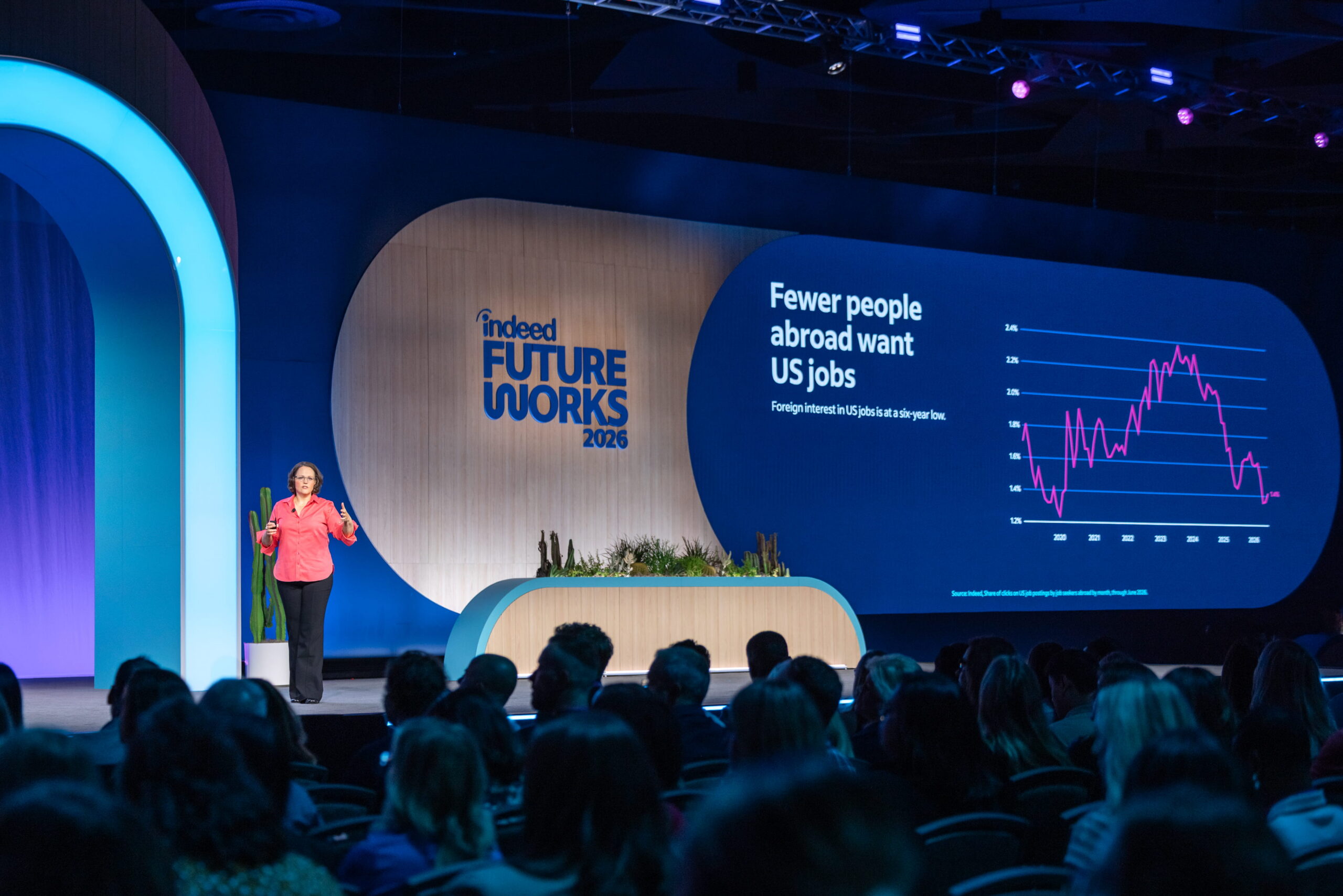
Indeed Chief Economist Svenja Gudell was introduced to the FutureWorks stage as the audience’s “human GPS through labor market traffic.” She describes the current low-hire, low-fire market as “a ginormous hug; everyone’s holding on really tight, but it doesn’t feel that cozy.”
Workers’ willingness to cross occupational boundaries could give employers a broader pool of talent, though it does not necessarily mean they are moving into the sectors experiencing the deepest shortages. A Hiring Lab analysis of more than 35 million anonymized U.S. Indeed profiles found that 64% of users who started a new job between 2022 and 2024 changed occupations.
To identify which of these workers may be equipped to move into a particular role, employers can look beyond job titles to the skills that occupations share. For example, the Indeed Skills Map, based on Hiring Lab data, shows that more than 70% of job postings include a business operations skill, such as customer service, administration or communication. That overlap suggests familiar titles and credentials may conceal viable talent at a time when employers need it most.
Hiring teams can make those connections more visible by separating the skills candidates need on day one from those they can develop after being hired. Where labor supply cannot meet demand, employers may also need to develop talent through upskilling and internal mobility.
Lesson 2: Use AI to amplify intelligence — not activity
As employers broaden their talent pools, AI hiring tools can help recruiters identify relevant skills and potential, make better-informed decisions and focus on work that requires human judgment.
John Fox, vice president of product at Indeed, framed that opportunity around a more complete definition of candidate quality. The requirements on a job description and the credentials on a resume are only part of the picture, he said. Employers can use their expertise to define what is required, preferred, nonnegotiable and flexible for a role and then use technology to help surface candidates who meet that bar.
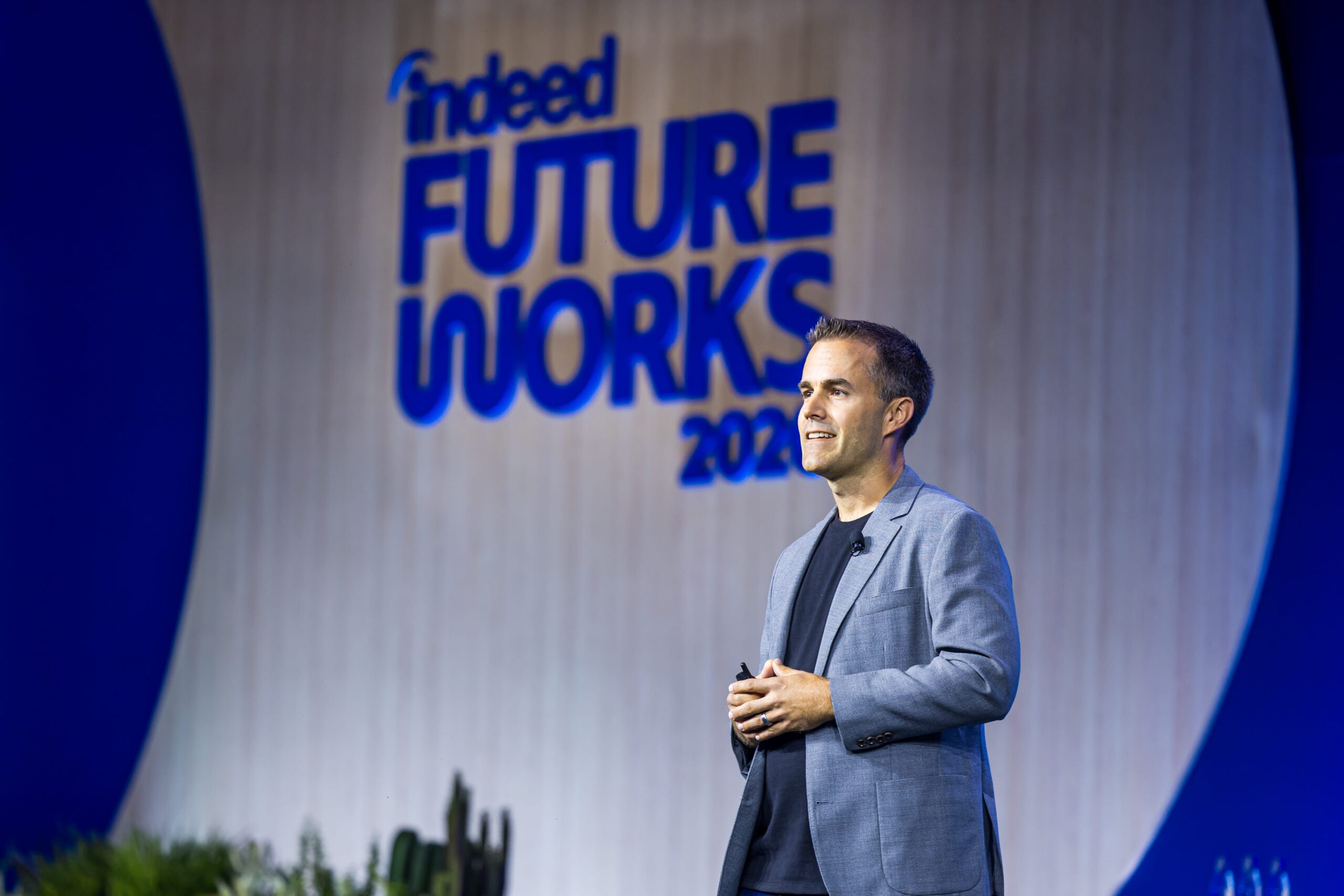
“A search query gives us intent, but it doesn't give us qualification,” Indeed VP of product John Fox said, discussing the evolution of matching technology in hiring.
That’s a better measure of AI’s value than how much activity it generates or time it saves. The goal is not simply more outreach or applications, but to help recruiters spend less time sorting through noise and more time evaluating fit, advising hiring managers and engaging candidates.
Indeed’s AI-powered recruiter tools can use an employer’s responses, actions and outcomes to improve candidate recommendations over time, Fox explained. A team’s job criteria can help surface candidates whose experience aligns with its requirements and give those candidates opportunities to provide additional context through screening, verification and conversation.
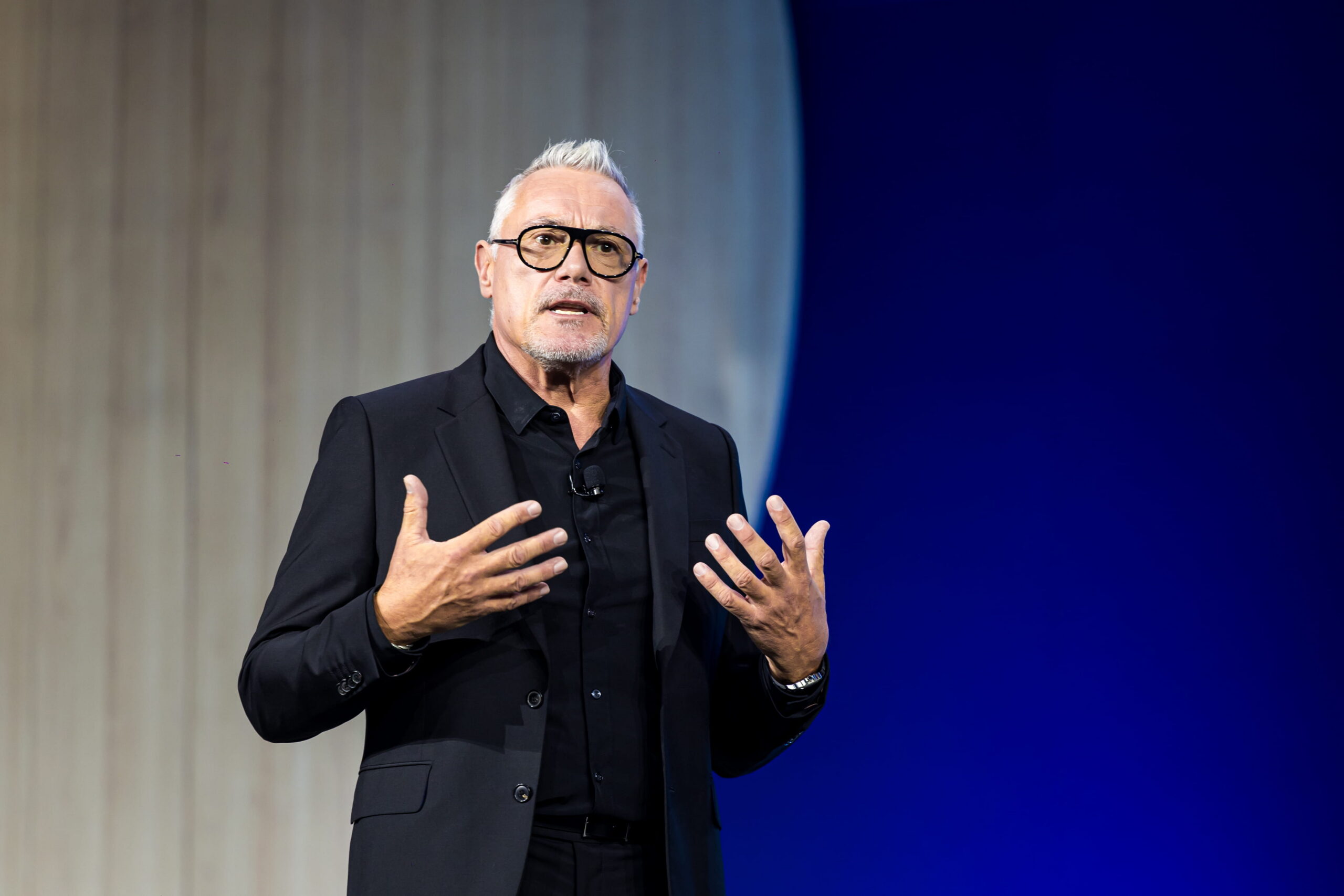
“In periods of great disruption, where many job seekers are feeling increasingly despondent and desperate, we have the ability to be a guiding light,” Indeed CMO James Whitemore told the audience of talent leaders at Indeed FutureWorks 2026.
Recruiters can retain control by reviewing and refining hiring criteria in plain language, evaluating sample candidates and setting practical guardrails for outreach. In this model, AI supports the recruiter’s definition of quality while leaving hiring decisions to people.
Indeed Chief Marketing Officer James Whitemore connected better hiring intelligence to the job seeker experience. Tools such as Indeed Career Scout can help people articulate skills and ambitions that may not appear in a traditional keyword match. As Whitemore said, “The match is made using data enriched with every job seeker engagement, but the hire is made by a person.”
Indeed CEO Hisayuki “Deko” Idekoba shared a simple but important reminder: Leaders may overestimate AI’s abilities while underestimating people. Amplified intelligence requires keeping human strengths and contributions at the center of AI applications.
Lesson 3: Build trust into AI-supported decisions, in hiring and at work
Better intelligence matters only when people have reason to rely on it. Anthony Moisant, — who holds the joint title of Indeed’s chief information and chief security officer — said the challenge is to maximize value creation while ensuring that value is scalable and sustainable. His solution: embed trust into every system an organization builds.
Both velocity and governance matter in AI-supported hiring. Moisant cautioned that unstructured, frantic energy can look like speed but rarely produces lasting business value. Organizations that scale AI successfully establish guardrails, educate their workforce and address risks upfront; with those foundations in place, they can move faster through secure, standardized pathways.
For talent leaders, the equivalent is clarity. Organizations can build trust with job seekers and workers alike by explaining why AI is being used, what decisions it informs, what information it considers and where human judgment remains essential. The stakes are especially high in hiring, where opaque processes can quickly erode confidence for people already navigating a stressful and uncertain moment.
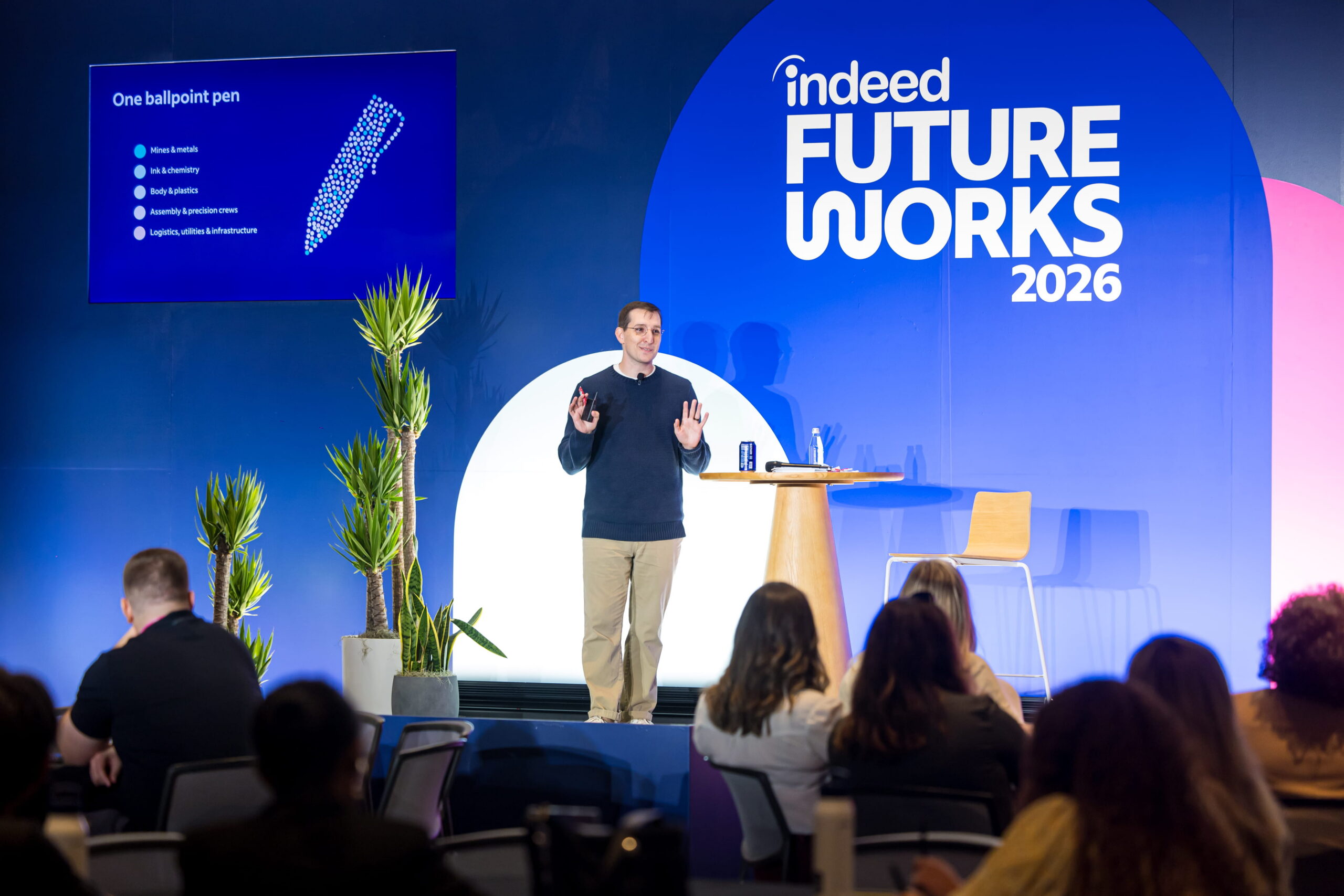
Indeed Senior Talent Strategy Advisor Kyle M.K. led a breakout session on “Building Communities of Trust in the Age of Uncertainty.”
Kyle M.K., Indeed senior talent strategy advisor, focused on that human dimension in a breakout session on building communities of trust. Across conversations about the job search, interviews, pay and development, one pattern emerged: a lack of open communication creates a lack of trust. Clear expectations, context and transparency give people less reason to fill informational gaps with their worst assumptions.
That lesson applies whether the process is powered by AI or not. Automation can reduce administrative friction, but empathy, relationship-building and professional judgment remain distinctly human.
“There are very specific points throughout this community-building effort where we want help and automation, and other parts where we certainly do not want AI — we want it to be a human thing,” M.K. said.
The challenge ahead: Matching the right people to the right jobs
As Gudell put it: “We’re going to have plenty of work to do, but will we have enough people? And are we actually going to be able to match the right people to the right job?”
For talent leaders, that challenge creates an opportunity to recognize transferable skills, use AI to surface stronger matches and build the clarity people need to trust AI-supported decisions. As technology changes, the work of hiring remains the same: connecting people’s skills and potential with opportunity.
To dive deeper into the breakthrough ideas and takeaways from the stage, read “What Indeed FutureWorks 2026 Revealed About AI, The Human Advantage, and Hiring’s Next Decade.”
Get the latest insights on the workplace and hiring, straight to your inbox
Sign Up Now
Discover Work Wellbeing
Get insights and inspiration for the modern world of work
We’ll be in touch soon with the insights and inspiration you need to lead a thriving workforce. In the meantime, check out the recommended articles below.


