The Power of Leading With Empathy: Advice From Former New Zealand Prime Minister, the Rt. Hon. Dame Jacinda Ardern

Get the latest insights on the workplace and hiring, straight to your inbox
Sign Up NowKey Takeaways
- Believe in people who doubt themselves. Their humility drives them to build strong, collaborative teams and seek expert input.
- People don’t expect leaders to have all the answers; they expect honesty, transparency and a clear plan.
- Empathy is a strength, not a weakness, in leadership. It means you have a strong set of values and a determination to see them through.
The Rt. Hon. Dame Jacinda Ardern’s political career has been defined by a series of firsts.
In 2017, when she became prime minister of New Zealand at age 37, Ardern became the world’s youngest-ever female head of state. The following June, she became the country’s first leader to ever give birth while in office and set a worldwide precedent by taking a six-week maternity leave from her position. Ardern once again made headlines as the first world leader to bring her infant to the United Nations General Assembly, signaling to the world that a new model of inclusive leadership was possible.
Throughout her career, Ardern has subverted expectations about what power looks like, both as a politician and now as founder of Field, a global fellowship program that focuses on training more empathetic political leaders.
“These ideas that we previously positioned as being weaknesses in leadership, I actually find they’re strengths,” Ardern said at the Indeed FutureWorks 2025 conference.
In conversation with Lisa Ramirez, Indeed’s SVP of Operations and Client Success, Ardern talked about her own reluctant path to politics, her struggle with imposter syndrome, and why those doubts have made her a better leader. She offered advice for employers on how to lead through uncertainty, and why every leader needs a “village” to support them.
Discover practical strategies to boost employee engagement, develop strong leadership in talent acquisition, and attract the best talent in a competitive market.
Ramirez: You were recruited to run for office. That means someone saw your potential. It’s a reminder that none of us succeed on our own, and also that we have to seek out talent, not just rely on what comes to us. What did that moment mean for you?
Ardern: One of the reasons I was very reluctant about going into politics was that I didn’t think I had the character traits required. I was pretty thin-skinned. I thought the cut and thrust of the environment would be too much for me, and I thought it required a level of expertise and general knowledge that I would struggle to bring to the task. But I worked closely with other people in politics, and they thought I had something to offer. When they asked me if I would run for office, I said, “Absolutely not.” I was asked several times before eventually I [said yes].
My message from that would be: Ask. If you seek out those who have that hesitancy, they will bring humility to the work. They’re probably the kind of people that will bring in expertise and advice because they might doubt their own skills. And couldn’t we do with a bit more of that type of leadership?
One of the most iconic images of you while in office was at the United Nations with your daughter, Neve. What I saw in the image is someone who deeply cared about the country and the state of world affairs, and who also had a job to do for her family. How do you think that makes you a better leader?
Neve was there because I was still breastfeeding. I had no intention of having this public moment. I was doing that usual thing we do, where we pull ridiculous faces because our baby’s so goddamn cute. I’ve got a full double-chin situation. And that’s when the cameras started clicking.
When I get asked about those photos, the thing I worry about is that somehow it becomes symbolic of a woman “doing it all” — proof that you can lead a country and be a mother. The answer is: Yes, women can do it all, but they should not have to do it alone.
There I am with my triple-chins, but there’s my husband right next to me, and I could not have been there without him. On the other side is my foreign policy advisor, who had babysat Neve the night before so that I could go to the reception with the President of the United States. I had a village, and I felt a responsibility to replicate what the government could do to help create a village for families and give women more choices.
You were New Zealand’s prime minister from 2017 to 2023. I think we can all agree that those were some very tough years to lead a country. The world is still uncertain. I’d love to hear about the lessons you learned from that time.
New Zealand had a particularly rough run. In 2019, we had a domestic terror attack. We had a volcanic eruption at the end of that year that took more than 20 lives. And then, of course, COVID. We are led to believe that in order to command the trust and confidence of the people you lead you must display absolute knowledge at all times. One of the key lessons for me is, I don’t think that is what leaders need to display, either in crisis or during significant disruption.
COVID was an experience where it was so clear that leaders did not know everything. That was the moment to stand in front of the communities that we served and say, “We are working as we go, but we pledge to share what we know when we know it.” You don’t have to know everything, but you have to have a plan.
Now when it comes to AI, what is causing people the most fear? Loss of jobs. You can’t predict the endpoint, but you can work through a plan to help support people through those stages.
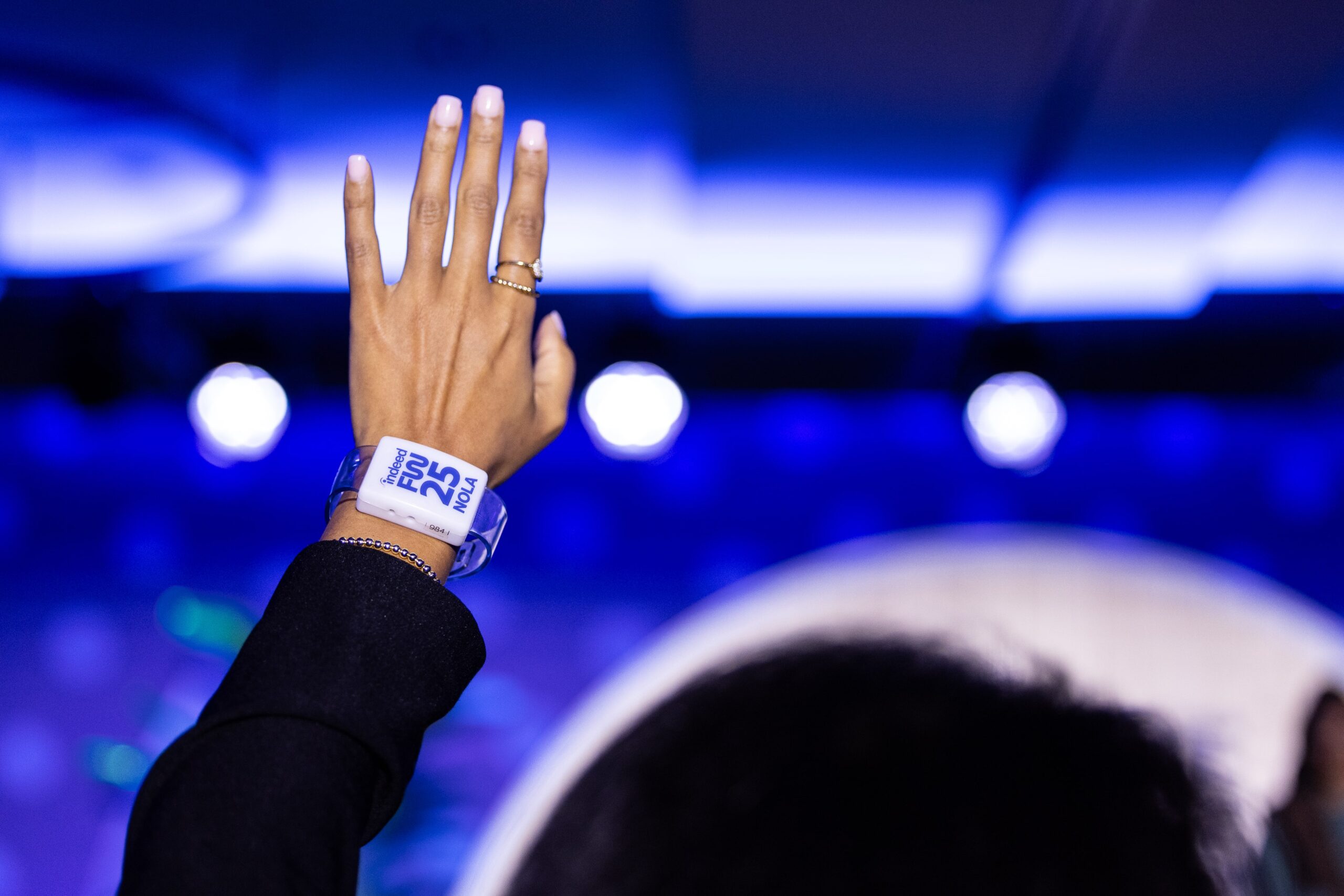
One of the ideas I’d really love to disrupt is this assumption that if you’re empathetic, somehow you’re dithering," said Rt. Hon. Dame Ardern. "If you’re driven by a desire to serve with a really compassionate approach and a particular set of values, that requires a pretty clear eye on what needs to be done and how you’re going to get there."
You’ve been widely praised as an empathetic leader, but you’re also very decisive and get a lot done. How do you balance empathy and decisiveness?
One of the ideas I’d really love to disrupt is this assumption that if you’re empathetic, somehow you’re dithering. I don’t really know the origin of that, but in my experience it’s the opposite. If you’re driven by a desire to serve with a really compassionate approach and a particular set of values, that requires a pretty clear eye on what needs to be done and how you’re going to get there.
The second point I would add is, I have very openly suffered from imposter syndrome my whole life. I use that word, “suffer,” like it’s some kind of physical ailment. It’s perceived as a weakness. But what you do to compensate is, you research. You make sure you become an expert on an issue, you bring in advisors who can help support you in your decision-making. Once you go through a process like that, when someone says to you, “Prime Minister, is the decision A, B or C?” you have spent so much time deep-diving into that issue that you know exactly where you’re going.
One of your trademarks as a leader has been your optimism — what some have called “relentless positivity.” Despite the uncertainty in the world today, what leaves you with hope for the future?
I had the pleasure to spend a couple years in and around young people at an educational institution. We are in a really difficult, fraught period in our history, and we’ve been through these before. It feels particularly acute right now. But I’ve been around young people who are not indifferent. They don’t see what’s happening in the world and think, “Ah, I’m just gonna stay in my room and wait till this passes.” They’re out there in spite of the environment. They’re bringing entrepreneurial ideas into the private sector, or they’re out advocating for change in their communities to help solve problems — and often they’ll be doing that despite whatever regulatory environment exists, or how despondent they might be about politics or leadership in their community. They’re out there holding on to hope that things can be different. So the reason I am optimistic is because I still see an expectation. It is an expectation that things can be better.
Indeed provides this information as a courtesy to users of this site. Please note that we are not your recruiting or legal advisor, we are not responsible for the content of your job descriptions, and none of the information provided herein guarantees performance.
More Stories From Indeed FutureWorks 2025
Indeed Reimagines Hiring, Using AI to Help Employers Find Quality Talent Faster
Indeed’s New AI Hiring Solutions: First Reactions
40% of Employees Don’t Trust People in Their Company. Now What?
Beyond the Headlines: What the Data Really Says About the Labor Market
Introducing a New Indeed AI Platform to Transform Workforce Management
What Adam Grant Got Wrong About the Future of Work — and What You’re Probably Getting Wrong, Too
Get the latest insights on the workplace and hiring, straight to your inbox
Sign Up Now
Discover Work Wellbeing
Get insights and inspiration for the modern world of work
We’ll be in touch soon with the insights and inspiration you need to lead a thriving workforce. In the meantime, check out the recommended articles below.


