From Skills Searches to Job Offers: Bridging the Biggest Disconnects That Make Hiring Harder

Key Takeaways
- Indeed’s annual survey of job seekers and employers found deep disconnects on everything from what makes for a compelling job offer to the essential skills in a new hire.
- These mismatches make it difficult for employers to find the right candidate at the right time.
- Employers can bridge these gaps by being more specific about the skills they’re looking for, adopting AI and other efficiencies to speed up hiring, and having candid conversations about work-life balance and flexibility.
Technology has made a lot of things in life easier. Hiring isn’t always one of them.
Michelle Slater proved as much when she stepped onstage at Indeed FutureWorks 2025, an annual gathering of talent leaders from around the world.
“Raise your hand if you think that hiring the ideal candidate is significantly easier today than it was a year ago?” asked Slater, Indeed’s Senior Marketing Director for the Americas Region and Global Partnerships.
Not a single hand in the audience went up. “That’s, sadly, what I thought,” Slater said.
It was more than a hunch. Slater’s prediction was based in large part on an upcoming Indeed report, which reveals that both employers and job seekers face a wide range of frustrations and miscommunications during the hiring process.
Indeed asked more than 9,000 job seekers and employers across 12 countries about everything from the skills that are most important in an interview to the biggest hiring challenges both groups face. The survey found that the two sides are badly misaligned when it comes to what matters in the hiring process. “I think we can all agree that hiring feels a lot like missed connections,” Slater said.
Dennis Kaps, Vice President of People and Talent Acquisition at the windshield repair firm Safelite, joined Slater onstage to offer his own firsthand experience in connecting with strong candidates and using AI to streamline the process without losing the human touch. Together, they offered FutureWorks attendees a close look at the biggest missed connections employers and job seekers face — and strategies for bridging the gap.
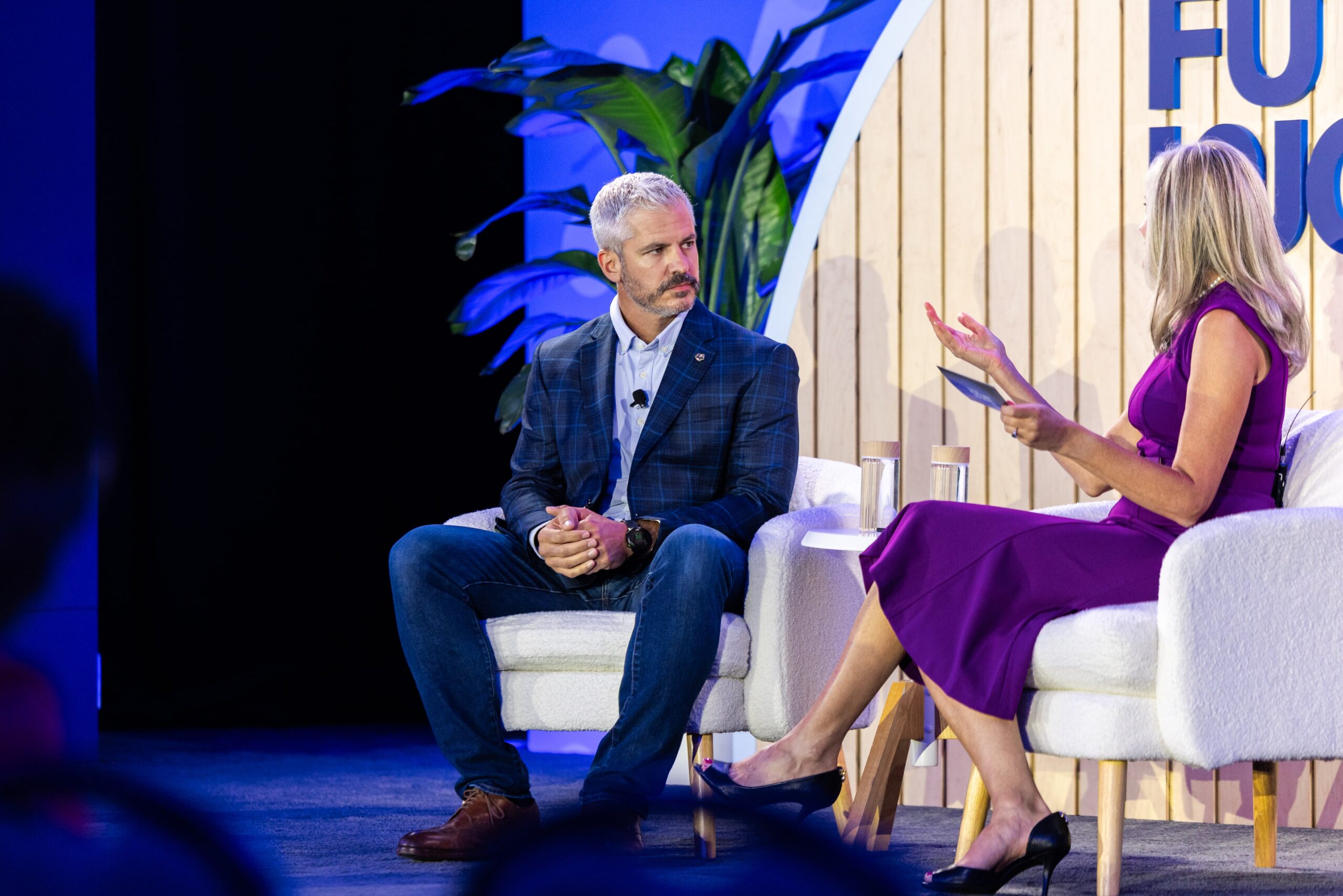
“We try to offer a lot of flexibility where we can,” Dennis Kaps, VP of People and TA at Safelite (left), told Slater (right), discussing the company's record-high employee engagement scores. “It works better for their lives."
Get the latest insights on the workplace and hiring, straight to your inbox
Sign Up NowMissed Connection #1: Employers are looking for leaders. Job seekers don’t know that.
The data: Forty percent of employers surveyed said workforce and leadership skills are the most lacking in their organizations. The problem? Job seekers aren’t demonstrating those skills when they apply for jobs. Instead, they believe it’s most important to highlight their industry-specific experience to potential employers.
The Indeed insight: “Employers are screening out adaptable, future-ready talent because they’re not asking for the specificity of what they really need,” Slater said. “And candidates aren’t showcasing the true value of their experiences because they don’t realize what employers are looking for.”
The solution: Spell out your need for leadership skills in job postings and ask applicants for concrete examples of their leadership abilities in interviews. Also, look for candidates who are investing in themselves by taking courses to bolster their skill sets.
The employer view: Kaps warned against trying to find job applicants with every possible skill you’re looking for, which he says is like searching for “a unicorn or a purple squirrel.” Kaps’ team uses realistic job preview videos to clearly communicate to candidates what the job will entail. “Really honing in on that potential gives you the right building blocks,” Kaps said, because it reveals candidates Safelite can train to be great technicians.
The hiring landscape is shifting fast. Global labor shortages, mismatched skills, and sluggish recruitment processes are putting serious pressure on employers everywhere. But what if you could turn those challenges into your biggest competitive advantage? In this session, Indeed’s Michelle Slater reveals powerful, data-backed strategies from six countries that could help companies hire better, faster, and smarter.
Missed Connection #2: Hiring is too slow — and it costs both sides.
The data: Slater took another informal poll of the FutureWorks crowd: “Raise your hand if your company takes less than two weeks from posting a job to making a job offer.”
While a few people raised their hands, the vast majority did not.
That could be a problem, according to Indeed’s annual survey. While both job seekers and employers generally see two to four weeks as a reasonable amount of time to make a job offer, a quarter of job seekers say they’ll move on if the process takes more than two weeks.
“Hiring feels a lot like missed connections.”
— Michelle Slater, Indeed’s Senior Marketing Director for the Americas Region and Global Partnerships
The Indeed insight: “Think about that: You find the perfect person. They’re just excellent. You’re really excited to have them join your team. But if your process drags on too long, they’re gone,” Slater said. “And if they feel like you forgot about them…their negative experience is contagious.”
The solution: Streamline interview steps and use AI to help with scheduling and initial screening. Slater said Indeed Talent Scout can help by identifying high-quality candidates, explaining why they may be a good fit and letting you easily connect using automated, personalized messages. But be transparent about how you’re using AI to hire. And if you can’t accelerate the process, keep up the communication with applicants. Remember that a bad candidate experience can damage your brand.
The employer view: Safelite has dramatically reduced time to hire through automation. The company uses automated text messages to schedule interviews, for instance, and has also automated background checks and the offer process. According to Kaps, it now takes seven days to hire a technician, five to hire a supply chain professional and two to hire for Safelite’s contact centers. Just as important: Kaps said new hires who come through this process rate it highly on a follow-up Net Promoter survey. “The ones that we end up hiring really like it,” he said. “The ones that don’t get hired don’t like it as much.”
Missed Connection #3: Employers aren’t offering what job seekers really want.
The data: For job seekers, the survey found that work-life balance and flexibility are the most important aspects of any offer — more than one-third of job seekers said so. But less than a quarter of employers agree.
Job seekers also place a lot more weight on base salary than employers do. It’s the second most valuable part of an offer for job seekers, but employers rank it fourth.
The Indeed insight: “You don’t need to keep throwing money at the problem or perks at people,” Slater said. “You really need to deeply understand what motivates individuals who want to join your organization, and also what retains your ideal candidates.”
The solution: Be up-front about work flexibility in job descriptions and interviews, and define what flexibility means at your organization. If full flexibility, like remote work, isn’t an option, think about what options you can offer. Most importantly: Don’t wait for job seekers to ask.
The employer view: Kaps acknowledged that not every role lends itself to the same level of flexibility, but he said, “We try to offer a lot of flexibility where we can.” The company’s call center associates now work from home, which Kaps said has contributed to record-high employee engagement scores. “It works better for their lives,” he said.
Sign up for the Indeed Insights newsletter to be the first to know when the full report comes out.
Indeed provides this information as a courtesy to users of this site. Please note that we are not your recruiting or legal advisor, we are not responsible for the content of your job descriptions, and none of the information provided herein guarantees performance.
More Stories From Indeed FutureWorks 2025
Indeed Reimagines Hiring, Using AI to Help Employers Find Quality Talent Faster
40% of Employees Don’t Trust People in Their Company. Now What?
Beyond the Headlines: What the Data Really Says About the Labor Market
Introducing a New Indeed AI Platform to Transform Workforce Management
What Adam Grant Got Wrong About the Future of Work — and What You’re Probably Getting Wrong, Too
Get the latest insights on the workplace and hiring, straight to your inbox
Sign Up Now
Discover Work Wellbeing
Get insights and inspiration for the modern world of work
We’ll be in touch soon with the insights and inspiration you need to lead a thriving workforce. In the meantime, check out the recommended articles below.


