40% of Employees Don’t Trust People in Their Company. Now What?

Key Takeaways
- Communication gaps are a major cause of distrust at work.
- To repair the rift, leaders must learn different “trust languages,” which range from acknowledging people’s success to being more transparent.
- Ultimately, trust in the workplace is good for the bottom line.
Breaches of trust at work are rarely intentional. The problem usually lies in miscommunication, says workplace consultant Minda Harts. She experienced that disconnect firsthand with a former manager who wouldn’t give her feedback. Her mind reeled with the possibilities: “He doesn’t like me, he’s not supportive of me, he doesn’t want me to succeed,” she recalled onstage at Indeed FutureWorks 2025 in New Orleans.
Then Harts took a step back and realized that her manager simply didn’t understand her expectations. As she heard more about others who distrusted colleagues, managers or HR, she realized that they were experiencing “less of a trust issue and more of a communication crisis.” Harts wrote “Talk to Me Nice: The Seven Trust Languages for a Better Workplace” to help leaders bridge that gap with strategies that build resilient, high-performing teams.
Here are Harts’ takeaways about repairing trust in the workplace:
Get the latest insights on the workplace and hiring, straight to your inbox
Sign Up NowFour in 10 people don’t trust the people they work with.
- Forty percent of workers have some level of distrust or uncertainty about their leaders and colleagues, according to Indeed’s upcoming “2025 Report: How Work Wellbeing Fuels Performance.”
- Gen Z has significantly lower trust compared to other generations, the research shows. Only 41% of Gen Z employees say they trust their employer, versus about 65% of millennials, 64% of Gen X and 71% of baby boomers.
- Employees with low workplace wellbeing also report low trust at work. As Harts said, “I don’t know if anybody has ever felt anxious at work, but I guarantee that has something to do with trusting your environment.”
At Indeed FutureWorks 2025 in New Orleans, workplace consultant Minda Harts led an interactive session on the seven “trust languages” that support employee well-being.
Trust fuels work wellbeing — and wellbeing predicts business success.
- “Trust isn’t just nice to have,” Harts said. “It’s also good for the bottom line.” Research from Indeed shows that trust is one of the top drivers of work wellbeing. And Indeed’s Work Wellbeing 100 illustrates how companies with higher wellbeing outperform the stock market.
- Trusting employees also stay at companies longer. Turnover rates at high-trust organizations are 50% lower than their competitors’. High turnover “is something we can solve for. Trust is at the center of people feeling like they want to stay,” Harts said.
Everyday scenarios — even something as simple as an insensitive email — can erode trust.
“Our words, our behaviors, our decisions, protocol, policies — they impact everybody in the workforce,” Harts said. Some examples include:
- CC’ing someone’s manager in a critical email instead of communicating with them one-on-one
- Saying that you plan to hire and promote internally, then hiring externally
- Failing to communicate clearly during layoffs or reorganizations
The seven trust languages can help repair workplace rifts.
Rebuilding trust starts with communication. Harts identified seven trust languages that employers can use, depending on the situation and what style is most important to a given employee, including:
- Security: “That means psychological safety, emotional safety, physical safety,” Harts said.
- Feedback: Harts emphasized that this should be meaningful, consistent insight. “It’s not enough to just give somebody some feedback and shut the door … Give them an opportunity to respond and let’s have a conversation, right?”
- Acknowledgement: “In this climate, we may not be able to give everyone a promotion or a merit increase,” Harts said. “But wouldn’t it feel good to know that [you didn’t just do a] nice job but, due to the research that you did on this project, it really helped the bottom line?”
- Demonstration: “If I tell you that we love to hire from and promote from within [...] you can tangibly see that in action,” Harts said.
- Sensitivity: Leaders should be mindful of the impact of their words and behaviors. If colleagues based in California are impacted by a wildfire, for example, it may be best to move meetings and check in on how they’re doing.
- Follow-through: “Some of you are just hoping and praying that somebody would keep their word at work, right?” Harts said.
- Transparency: “People don’t want ambiguity at work,” Harts said. Leaders may not have all the answers, but Harts encouraged them to share what they can. Leading a return to office? Explain the change, engage employees in conversation and be honest about the limits of your knowledge.
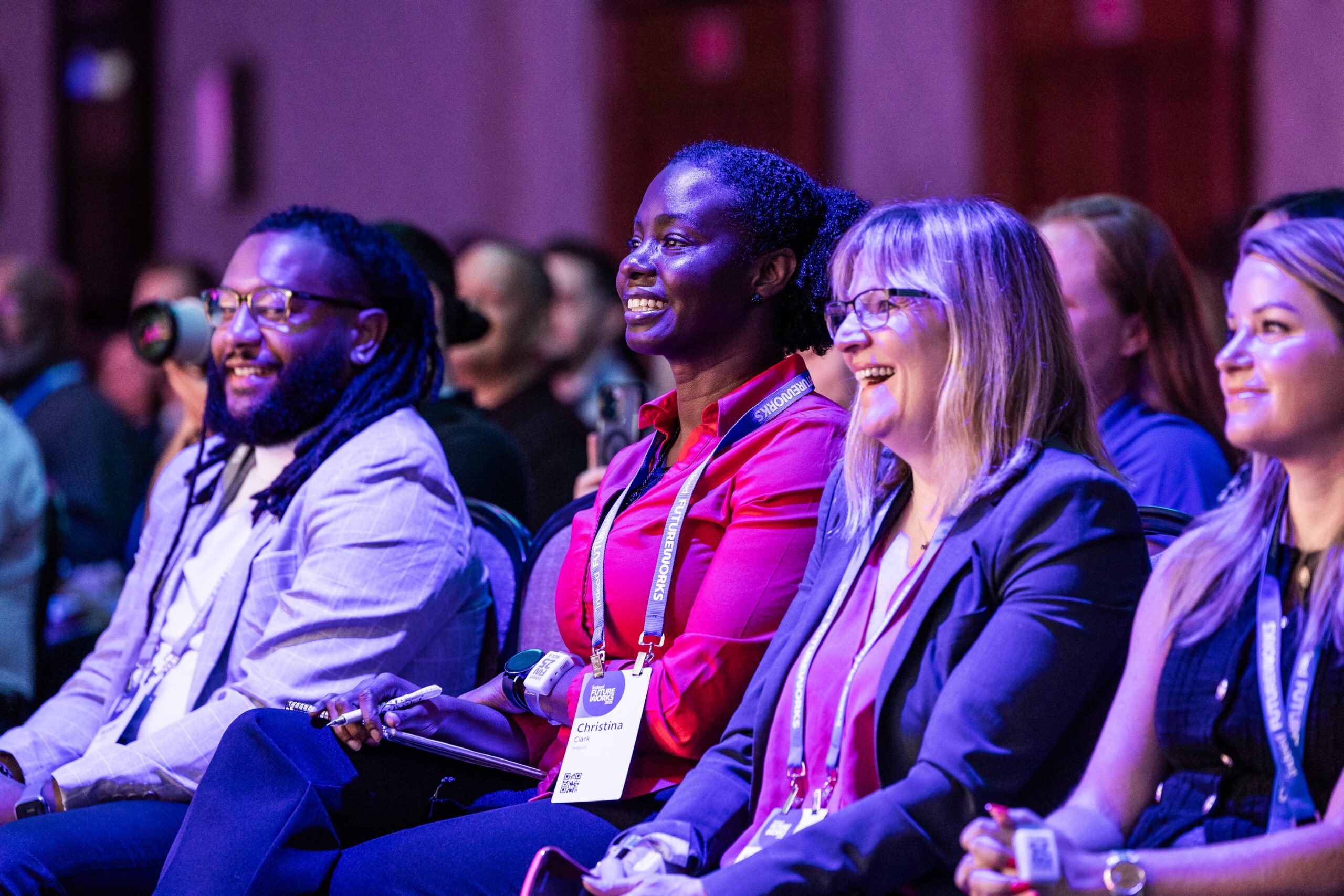
Hart engaged the virtual and in-person audience in her "Trust Catalyst" game, in which she presented a scenario and participants chose which trust language they believed to be the best approach.
There’s no one-size-fits-all trust language — and that’s okay.
“When I was younger, sometimes we couldn’t find the screwdriver and I’d find a butter knife,” Harts said. Some trust languages may be best for a particular scenario, but often others can work well. Listen to your people, and find out what speaks to them.
Next Steps: What is Your Team’s Trust Language?
“Oftentimes, we don’t even know what good looks like,” Harts said. “We’re projecting what we think other people need.” The first step is simple: Ask what trust languages are most valuable to your team. “Maybe I can’t speak all of your trust languages, but I can hit one or two, and I know that’s important to you.”
From there, commit to trust as a part of culture. “Trust is not a one-time event, it’s a lifestyle inside the workplace,” Harts said.
Indeed provides this information as a courtesy to users of this site. Please note that we are not your recruiting or legal advisor, we are not responsible for the content of your job descriptions, and none of the information provided herein guarantees performance.
More Stories From Indeed FutureWorks 2025
Indeed Reimagines Hiring, Using AI to Help Employers Find Quality Talent Faster
Indeed’s New AI Hiring Solutions: First Reactions
Beyond the Headlines: What the Data Really Says About the Labor Market
Introducing a New Indeed AI Platform to Transform Workforce Management
What Adam Grant Got Wrong About the Future of Work — and What You’re Probably Getting Wrong, Too
Get the latest insights on the workplace and hiring, straight to your inbox
Sign Up Now
Discover Work Wellbeing
Get insights and inspiration for the modern world of work
We’ll be in touch soon with the insights and inspiration you need to lead a thriving workforce. In the meantime, check out the recommended articles below.


