
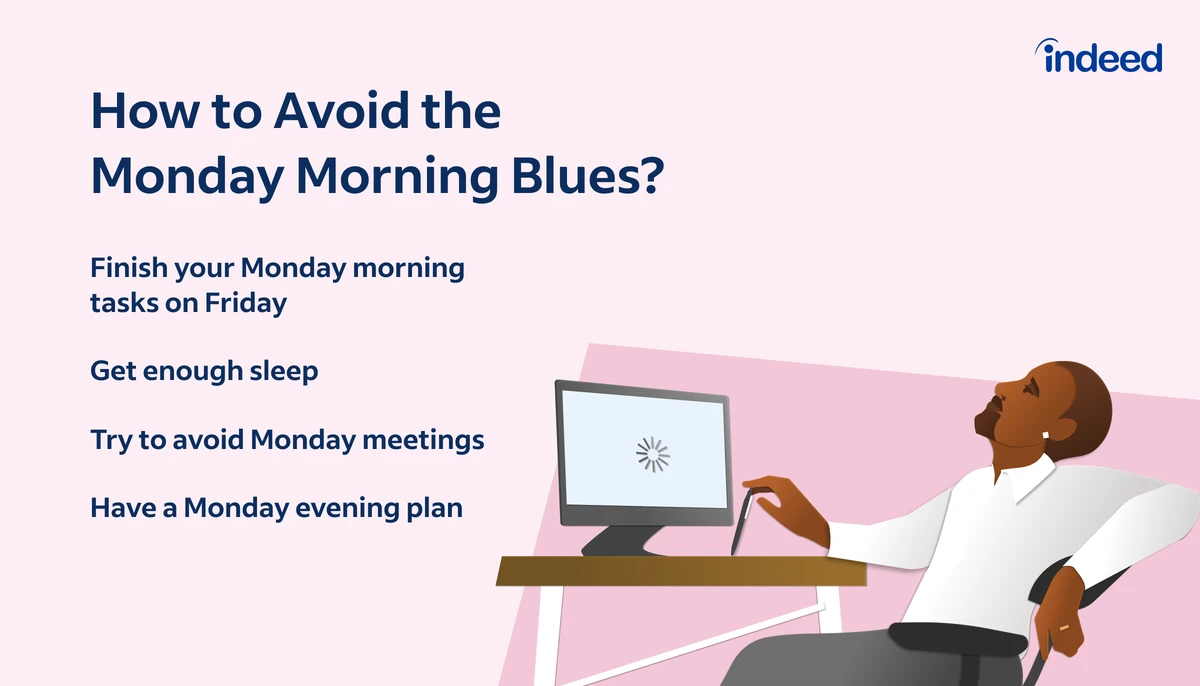
1. Set the week up for success on Friday
Encourage your team to use the last hour of the workweek to prepare for Monday by organizing files, prioritizing tasks, and completing small assignments. Setting clear goals in advance can help employees better manage the workload on Monday.
2. Encourage employees to disconnect
A healthy work-life balance can prevent employee burnout and ensure your team is rested. You can help your staff disconnect from work over the weekend by limiting non-urgent emails or messages after business hours. When employees notice leadership respects personal time, they’re more likely to return to work feeling refreshed.
3. Create a positive Monday morning routine
A simple, positive routine, such as drinking coffee and creating a to-do list, can help employees transition into the workweek. Instead of having employees begin their tasks when they arrive, you might create a brief window for social connection.
Consider a few options:
- Provide bagels, fruit, coffee, juice and tea in a common area to encourage informal conversation before the workday begins.
- Set aside the first 15 minutes of the day for a casual check-in where team members can briefly share about their weekend.
- Use a company communication channel, such as Slack or Microsoft Teams, to share a recent team accomplishment or positive customer feedback.
- Create a relaxed atmosphere by playing mellow music in common areas as workers arrive.
- Have teams spend five minutes writing down their top priorities for the week.
4. Rethink your Monday meeting schedule
Limiting internal Monday meetings or shifting recurring check-ins and brainstorming sessions to Tuesday can help employees focus on weekly tasks and reduce stress.
If external partners schedule meetings on Mondays, your team might designate periods in between to complete specific tasks. For example, a content manager might meet with clients throughout Monday for calibration calls and reserve several hours for internal tasks, such as placing orders or formatting deliverables.
5. Offer schedule flexibility
Consider offering a flexible work schedule for Mondays or Fridays to help increase motivation. For example, you might adjust core hours on Monday or implement summer Fridays, such as a half-day or four-day workweek.
These small adjustments to your company’s standard schedule can ease the transition from the weekend:
- Allow employees to start their day an hour later or leave an hour earlier on Mondays.
- Offer work-from-home days on one or two Mondays each month.
- Use a compressed schedule where employees work longer days in exchange for a half-day on Monday.
6. Give employees something positive to wait for
Positive events on Monday can help reframe how employees perceive Mondays. For example, you might host a team lunch, a catered snack break or a training session on an interesting area of professional development. You could also invite speakers to discuss topics related to the company’s office clubs, such as an author talk for the book club or a cooking demonstration for the culinary club.
Giving the team a positive, scheduled break can help the day feel more manageable and rewarding.
7. Send a positive start-of-week message
Consider sending a brief, encouraging team email or message on Monday morning. Keep the message optimistic and appreciative.
You may use these messages to boost morale and show that you value your employees:
- Mention a recently completed project or a team member’s notable contribution.
- Share your optimism for an upcoming project or company goal for the week.
- Express appreciation for your team’s hard work and dedication.
- Share a link to an insightful industry article or a piece on professional development.
- Spotlight a positive customer review or a success story from another department.
8. Check in with your employees
Consistently low motivation on Mondays may signal high stress levels or a disconnect from the company’s mission. One-on-one meetings with your employees can help you identify and address these problems.
Support open communication between colleagues and the leadership team. For example, production managers may ask about an employee’s projects and job satisfaction to offer support or make adjustments, such as delegating tasks or establishing goals to prevent mission creep.
9. Promote a wellness culture
A restful sleep on Sunday can impact an employee’s motivation on Monday. Promote a culture that values well-being by discouraging weekend work and modeling boundaries, such as setting out-of-office (OOO) hours.
10. Lead by example
If you appear enthusiastic and motivated on Mondays, your employees are likely to reflect that behavior. Your energy can help shape a more optimistic work environment and show your team that Monday is a day for productive, positive work. For example, you might show appreciation to your employees by picking up pastries for the team or inquiring about the weekend once you arrive.
FAQs about Monday blues
What are ways to differentiate the Monday blues from burnout?
Employees commonly experience a temporary lack of motivation on Mondays. If an employee seems disinterested in their work throughout the week or expresses concerns directly, it might signal burnout. Listening to their feedback may help you offer the appropriate resources and support, such as one-on-one meetings or professional help.
What is the origin of the term Monday blues?
Initially called Blue Monday, this term comes from the 18th century and describes a day when workers would be absent after an indulgent weekend. The word blue was associated with feelings of sadness, and its pairing with Monday created the term still used today.


